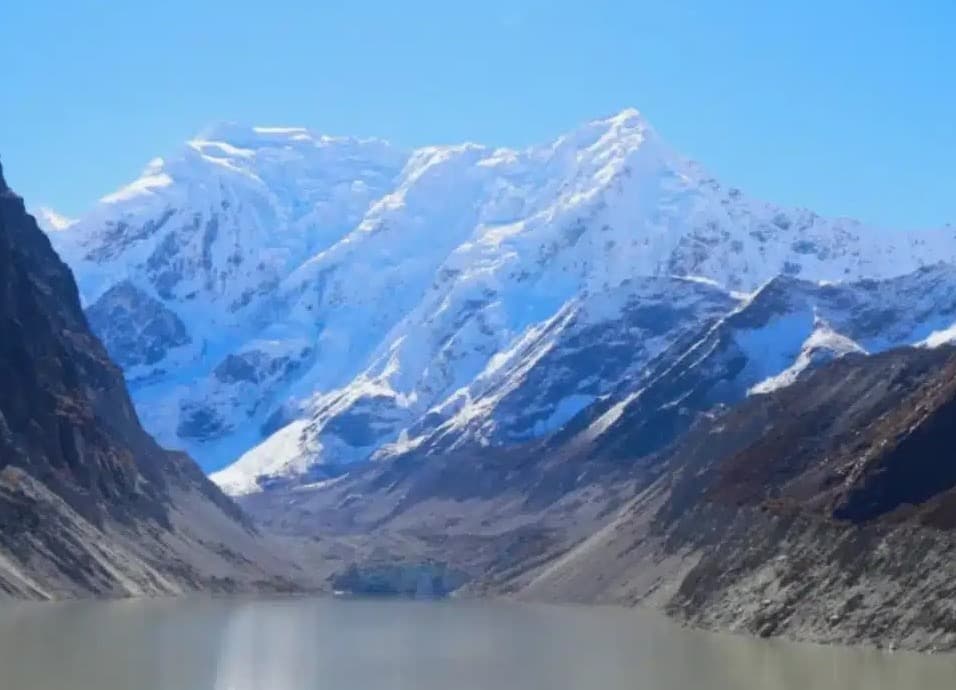
The Annapurna Base Camp Trek is one of those journeys that hits you differently the moment you start walking into the Himalayas. The air feels fresher, the mountains slowly start showing up, and everything around you just feels unreal in the best way.
This trek takes you deep into the Annapurna Region of Nepal, all the way up to Annapurna Base Camp (ABC) at 4,130 m (13,550 ft), surrounded by giant snow-covered peaks from every direction. It's not just about reaching a destination; it's about everything you experience on the way there.
What makes this trek so popular is the mix of everything you expect from Himalayan trekking in Nepal: massive mountain views, peaceful villages, forests that change colours with the seasons, and a trail that is challenging yet still manageable for most trekkers with basic fitness.
In this guide, we'll break down everything you need to plan your trip properly, from the itinerary and route to cost, difficulty, best time, and permits, so you don't miss anything important before starting the journey. However, before we jump into the full details, let's first understand what this trek really is and why so many people fall in love with it.
What Is The Annapurna Base Camp Trek
The Annapurna Base Camp Trek is a classic Himalayan journey in Nepal that takes you deep into the heart of the Annapurna Region. It's a trekking route that leads you step by step into the famous Annapurna Sanctuary, a natural mountain bowl surrounded by some of the world's highest peaks.
This trek is located in the Kaski District of Gandaki Province, western Nepal, and typically starts from Pokhara. It gradually climbs through villages, forests, and along the Modi River until reaching the base camp at 4,130 m (13,550 ft). At the top, you're completely surrounded by massive mountains like:
- Annapurna I (8,091 m/26,545 ft), world's 10th highest peak
- Annapurna South (7,219m / 23,684ft.)
- Machhapuchhre (6,993 m/22,943 ft)
- Hiunchuli (6,441 m/21,132 ft) and more.
What makes it special is the variety it offers in a single route; you hike from low green valleys to alpine landscapes without needing technical climbing skills. That's why it's one of the most popular examples of trekking in Nepal's Himalayas. In simple terms, it's a moderate-level trek that gives you a full Himalayan experience without going into extreme expedition territory.
Annapurna Base Camp Trek Highlights
- Walking through endless Annapurna mountain views where every turn feels like a new postcard moment, this is what makes the highlights of the ABC Trek truly unforgettable.
- Passing through traditional Gurung villages like Ghandruk and Chhomrong, where simple mountain life and warm smiles make the journey feel personal, not just scenic.
- Trekking through dense rhododendron forests that change colour with the seasons, making the trail feel alive and different every single day.
- Reaching viewpoints where the Himalayas open up suddenly, huge walls of snow and ice that make you stop walking just to take it all in.
- Crossing suspension bridges over a deep river in Jhinu, with the sound of rushing water below and mountains watching above.
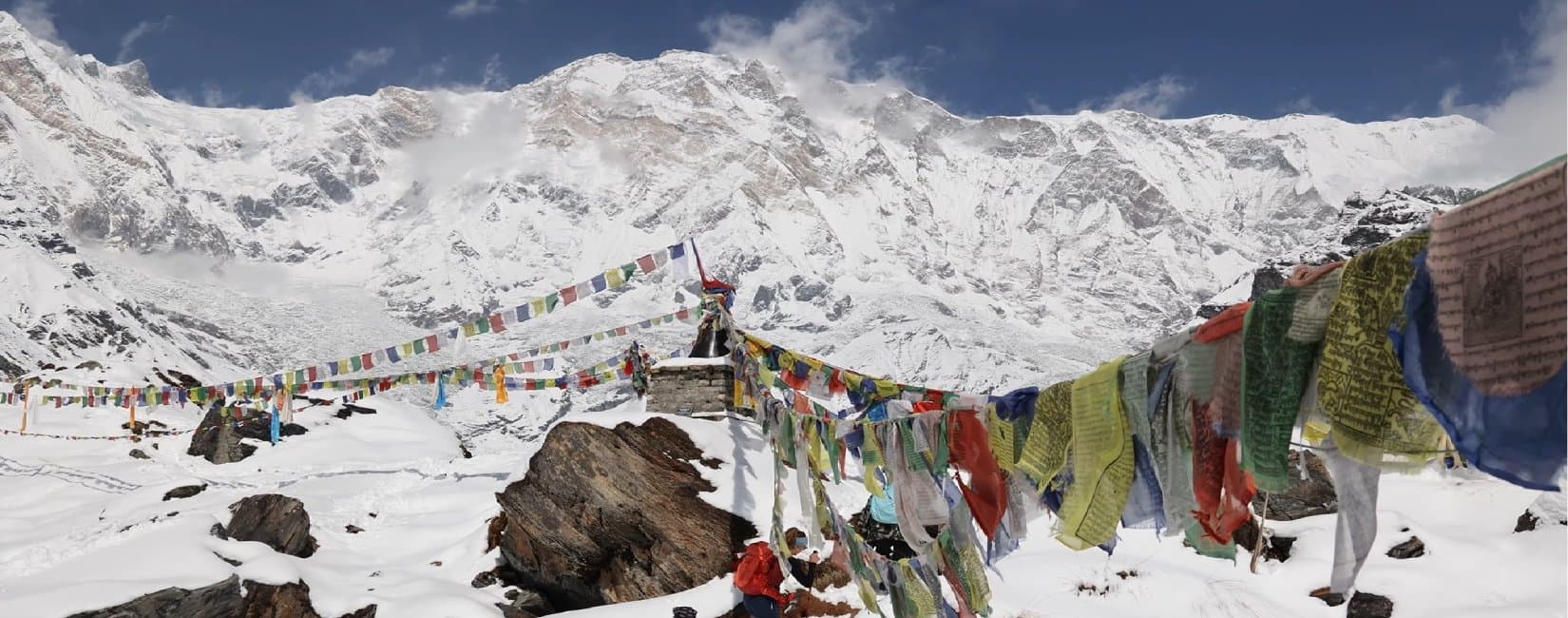
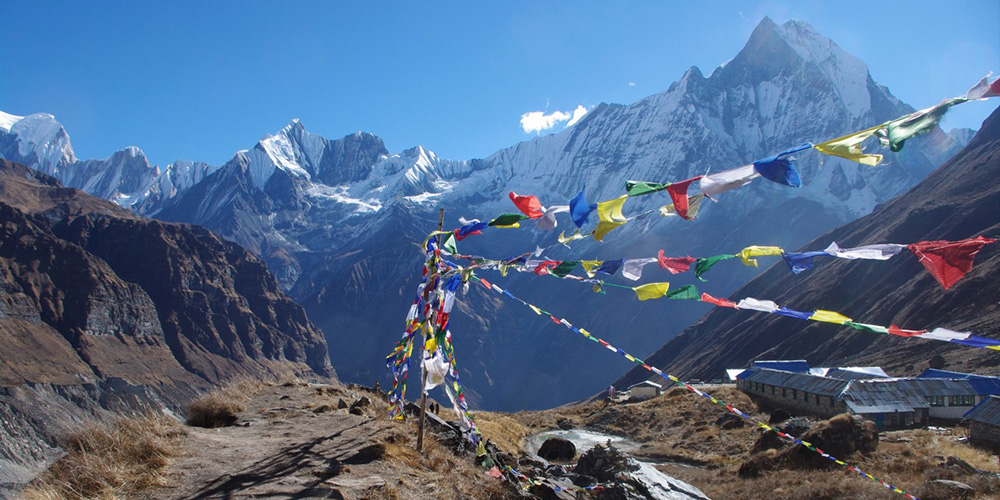
- Standing inside the Annapurna Sanctuary, completely surrounded by towering peaks like Annapurna I and Machhapuchhre, a feeling that's hard to describe until you're there.
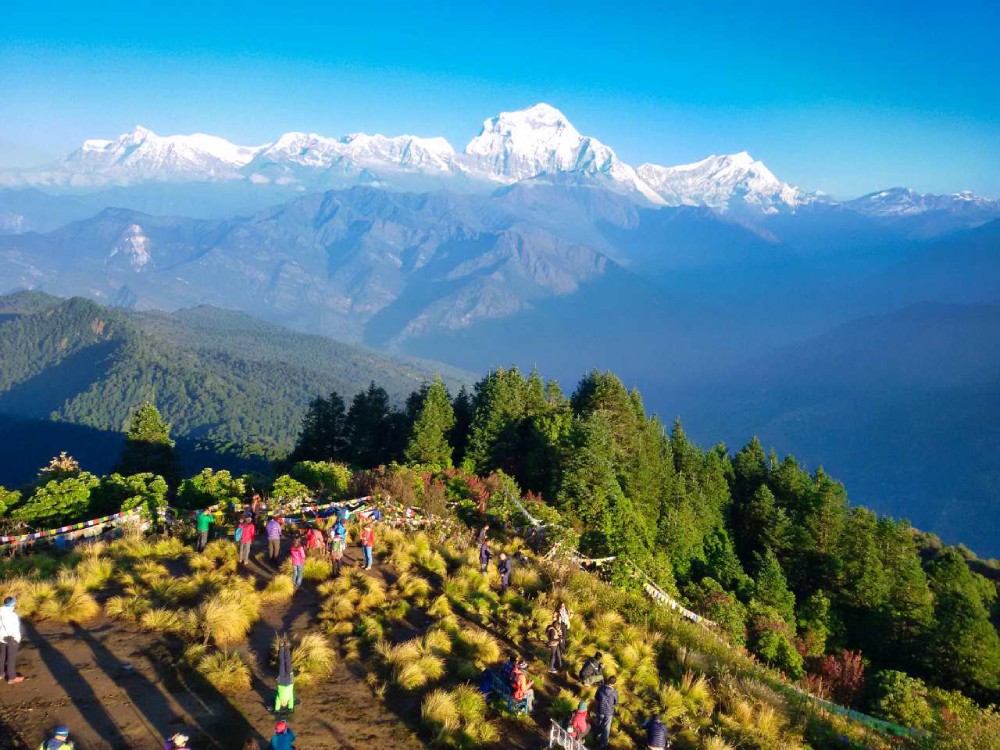
- Experiencing sunrise at the base camp, when the first light slowly hits the mountains and turns everything golden and unreal.
- Ending each day in cosy teahouses, where warm food and simple comfort feel more satisfying than anything else on the trail.
-
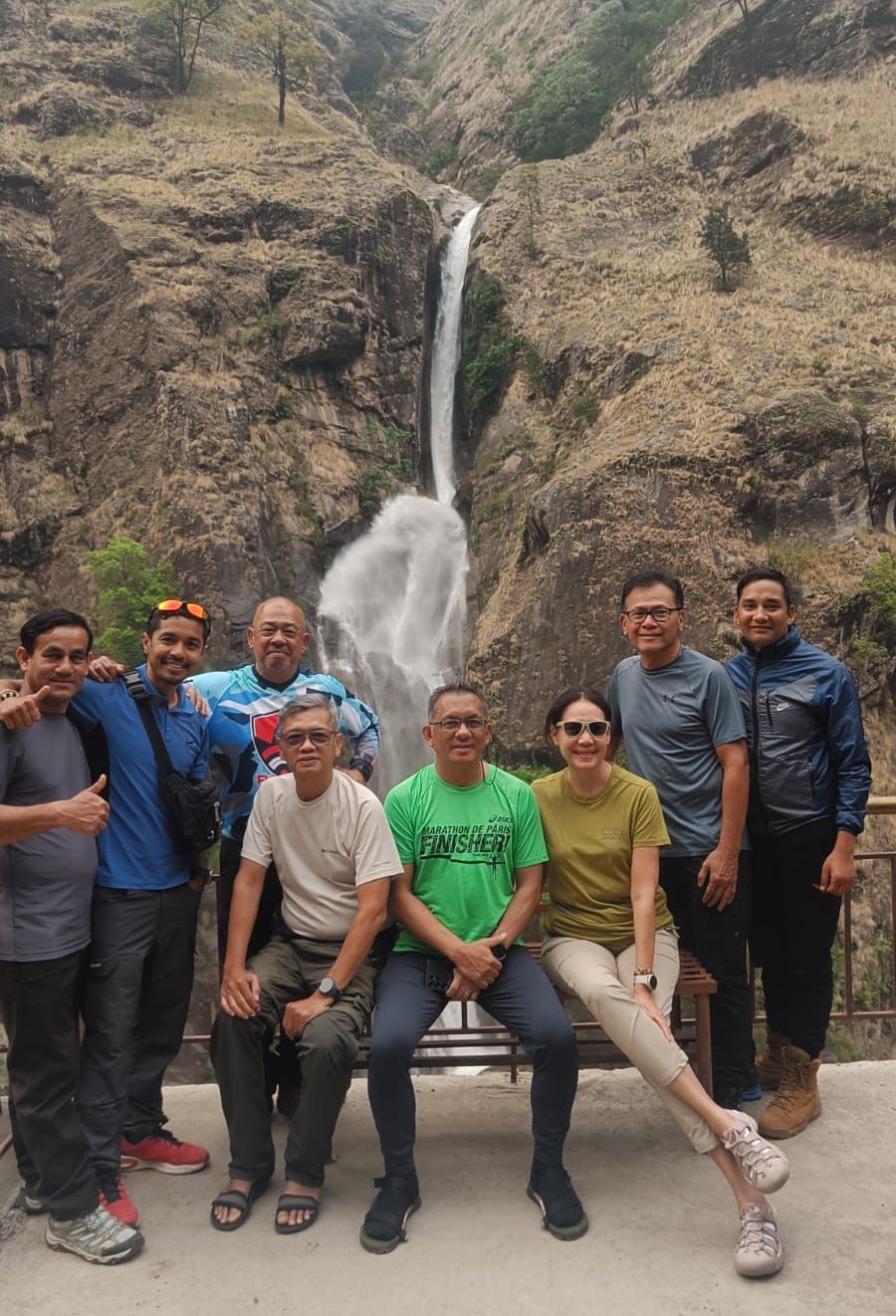
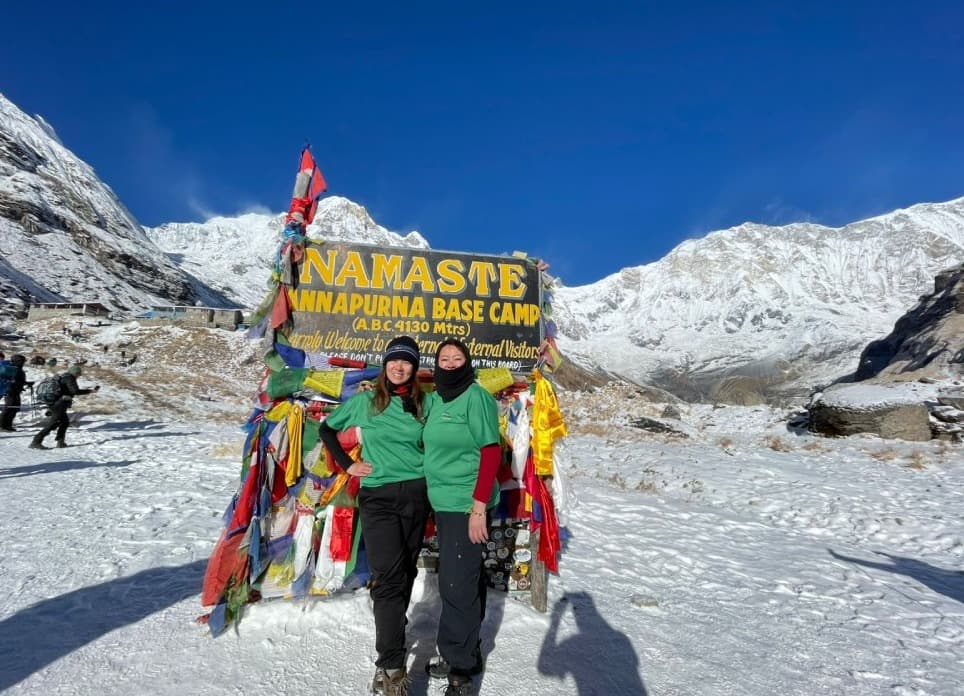
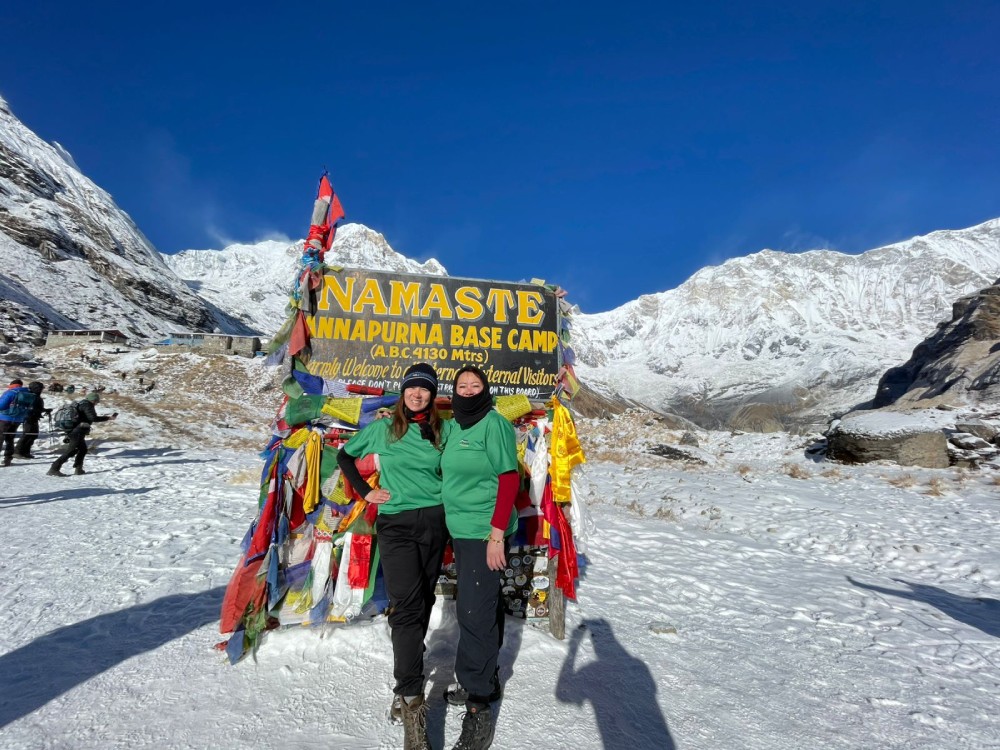
ABC trek with honoured Guests
Route, Distance & Trail Overview
The route map to Annapurna Base Camp usually starts from Pokhara, and that's where the real journey into the Himalayas begins. From Pokhara, you can either drive or travel towards Nayapul or Jhinu Danda, and then the trekking trail slowly unfolds into the mountains.
From there, the ABC trekking trail in Nepal passes through a series of beautiful villages like Ghandruk, Chhomrong, Bamboo, and Deurali. These villages naturally guide your journey deeper into the Annapurna Region, without feeling rushed, just a steady climb into the Himalayas.
The total trekking distance is around 110 km (round trip), depending on your exact starting point. On average, you'll be walking about 5 to 7 hours a day, which feels manageable but still gives you a proper Himalayan trekking experience.
The trail keeps changing its character as you move forward, with stone staircases carved into hillsides, suspension bridges in Jhinu and Chhomrong over rushing rivers, and peaceful forest sections filled with rhododendron and bamboo. As you go higher, the landscapes open up, and the mountains start surrounding you from all directions.
It isn't a flat or easy walk; the route constantly goes up and down. However, that's what makes the journey feel real, raw, and rewarding.
Annapurna Base Camp trek Itinerary (15 Days)
The ABC Trek can be done faster, but a 15-day Annapurna Base Camp trek duration is perfect if you want to enjoy the journey without rushing. It gives you enough time to walk at a steady pace, adjust to altitude, and actually experience the trail.
Here's how the route typically looks:
Day 1: Arrival in Kathmandu
- Altitude: 1,400 m (4,593 ft)
- Arrival, hotel check-in, and rest after your journey.
Day 2: Kathmandu Sightseeing & Trek Preparation
-
Explore cultural sites and prepare permits and gear for the trek.
Day 3: Drive to Pokhara
- Altitude: 822 m (2,697 ft)
- Scenic drive (6 to 7 hrs) to the lakeside city, the gateway to the trek.
Day 4: Drive to Nayapul and Trek to Tikhedhunga
- Altitude: 1,070 m (3,520 ft) and 1,540 m (5,050 ft)
- Short drive followed by a gentle trek through villages and farmland.
Day 5: Trek to Ghorepani
- Altitude: 2,850 m (9,350 ft)
- A steady uphill walk through forests and stone steps.
Day 6: Poon Hill Hike and Trek to Tadapani
- Altitude: 3,210 m (10,531 ft) and 2,630 m (8,628 ft)
- Early sunrise hike, then descend and continue through forest trails.
Day 7: Trek to Chhomrong
- Altitude: 2,170 m (7,119 ft)
- Mixed trail with ups and downs, entering deeper into the Annapurna region.
Day 8: Trek to Dovan
- Altitude: 2,600 m (8,530 ft)
- Walk through dense bamboo and rhododendron forest.
Day 9: Trek to Deurali
- Altitude: 3,200 m (10,498 ft)
- Gradual ascent with thinner air and more alpine scenery.
Day 10: Trek to ABC (via MBC)
- Altitude: 4,130 m (13,550 ft)
- Pass Machhapuchhre Base Camp (3,700 m / 12,139 ft) and reach ABC surrounded by peaks.
Day 11: Trek to Bamboo
- Altitude: 2,310 m (7,579 ft)
- Long descent back through the valley.
Day 12: Trek to Jhinu Danda (Hot Springs)
- Altitude: 1,780 m (5,839 ft)
- Relax in natural hot springs after days of trekking.
Day 13: Trek to Nayapul and Drive to Pokhara
- Altitude: 1,070 m (3,510 ft) and 822 m (2,697 ft)
- Final trekking day followed by a drive back to Pokhara.
Day 14: Drive to Kathmandu
-
Return journey with scenic views along the highway.
Day 15: Final Departure
- Departure or onward travel.
This itinerary of the ABC Trek keeps things comfortable, with enough time to enjoy the views, villages, and overall experience instead of just rushing to the base camp.
Difficulty Of Annapurna Base Camp Trek
The difficulty level of the ABC Trek is generally considered moderate. It isn't super easy, but definitely doable for most people with a bit of preparation.
First, the real challenge comes from the stairs and terrain. The trail has a lot of ups and downs, especially around places like Ulleri and Chhomrong, where long stone staircases can test your legs more than your lungs. Add in forest paths, rocky sections, and suspension bridges, and it keeps things interesting throughout.
Second, there's the altitude factor. You'll be going up to 4,130 m (13,550 ft), which isn't extreme compared to some high-altitude treks, but it's still high enough for your body to feel the change. The good thing is the route gains altitude gradually, which helps most trekkers adjust without major issues.
Third, it comes down to your fitness level. You don't need to be an athlete, but you should be comfortable walking 5 to 7 hours a day for multiple days in a row. A bit of cardio, some leg strength, and you're good to go.
And finally, while some trekkers choose to go solo trek to ABC without a guide, and that's perfectly fine, keep in mind that this is a remote destination where navigating the route and managing logistics can be challenging especially at the peak seasons. We recommend hiring a guide, at the very least.
Overall, it's a trek that challenges you just enough to feel rewarding. Nonetheless, with the right pace and mindset, even beginners can complete it and enjoy every part of the journey.
Best Time For Annapurna Base Camp Trek
The best season for the ABC trek is during spring and autumn, when the weather conditions of the Annapurna Region are stable, the skies are clear, and the trail is in good shape. The other two: winter and monsoon, are the off-seasons for trekking, not recommended.
Spring (March To May)
In this season, the weather is mild with comfortable temperatures, and visibility is usually great. The trail is also at its most colourful with blooming rhododendron forests, and conditions are dry enough for steady walking.
Autumn (September To November)
In this time of year, you get the clearest mountain views of the year. The weather stays stable, rainfall is minimal, and the trails are dry and easy to walk on, making it the most popular time to trek.
Winter (December To February)
It's much quieter, but it comes with cold temperatures, especially at higher altitudes. Snow can cover parts of the trail, which may slow you down, but on clear days, the views are still amazing.
Monsoon (June To August)
During this season, heavy rainfall affects visibility and trail conditions. The paths can get slippery, leeches are common in lower sections, and mountain views are often blocked by clouds.
Cost Of Annapurna Base Camp Trek (2026)
Let's keep it real, the cost of the ABC Trek in 2026 isn't a fixed number. It varies depending on how you plan your trip, your comfort level, and whether you go independently or with a package.
First, Permits are required for trekking in ABC. You'll need the Annapurna Conservation Area Permit (ACAP) and a Trekkers' Information Management System (TIMS) card. These are mandatory for everyone and form a small but essential part of your overall trekking budget in Nepal.
Then comes the guide and porter. Hiring a guide adds safety and local knowledge, while a porter makes the trek physically easier by carrying your backpack. You can skip them if you're experienced, but most trekkers prefer at least a guide for a smoother experience.
For food and accommodation, you'll be staying in teahouses along the trail. Costs gradually increase as you go higher, and while the facilities are basic, they're comfortable enough after a long day of walking. Meals like dal bhat, noodles, and soups are standard and widely available.
Next is transport, which usually includes travel between Kathmandu and Pokhara, plus the drive to and from the trek's trailhead. You can go for local buses to save money or private vehicles for more comfort.
Overall, if you're going on a budget-style trek, you'll spend less by choosing basic stays, local transport, and minimal services. A standard package, on the other hand, includes guide, accommodation, transport, and logistics, making the whole experience easier and more organized.
If you want a clear, hassle-free breakdown with everything included, check the Annapurna Base Camp Trek – 15 days package. It covers all the major costs in one plan.
Is ABC Trek Suitable For Beginners
Yes, the ABC Trek for beginners is absolutely doable, as long as you come in with the right mindset and a bit of preparation. First of all, there's no technical climbing involved. You're not using ropes or special gear; it's all about walking on well-established trails, which makes it much more approachable for anyone trying trekking in Nepal for the first time.
Second, the route follows a gradual ascent, which helps your body adjust naturally as you gain altitude. You're not jumping too high too fast, and that's a big reason why many beginners successfully complete this trek.
That said, the most important thing here is pacing yourself, not rushing. Walk at a steady pace, take breaks when needed, and listen to your body. Most problems on this journey happen when people try to go too fast, not because it's too hard.
A bit of preparation goes a long way. Some cardio, light hiking practice, and getting used to walking for a few hours a day will make your experience much smoother.
Since the return journey follows the same route back, it can feel tedious for beginners after an already demanding trek. If you'd rather skip the long walk back, there's always the option to return via helicopter from ABC directly to Pokhara, saving you both time and the strain of retracing your steps.
In the end, this trip is less about being super fit and more about being consistent and patient. If you take it slow and stay aware of how your body feels, you won't only complete it, you'll actually enjoy the journey along the way.
Why Choose ABC Trek
If you're wondering why choose ABC Trek, it really comes down to getting the best trek in the Annapurna Region without overcomplicating your journey. It gives you that full Himalayan experience, but in a way that feels manageable, rewarding, and honestly more personal.
Compared to something like the Everest Base Camp Trek, this trek is shorter, more affordable, and much easier to organize. You don't need flights to Lukla; the logistics are simpler, and the overall cost stays lower, which makes planning the trek way less stressful.
But what really makes it stand out is the experience on the trail. You aren't just looking at mountains from far away; you're walking right into them.
The views feel close, raw, and constantly changing as you move deeper into the valley. One day you're in green forests, the next you're surrounded by massive snow-covered peaks.
And then there are the villages. Places like Ghandruk and Chhomrong provide you with a real glimpse into local life in the mountains: simple, welcoming, and completely different from city life. It adds a human connection to the whole journey, not just scenery.
In the end, this trek isn't about ticking off a destination; it's about how the whole experience feels from start to finish. And once you stand in the middle of the Annapurna Sanctuary, surrounded by mountains in every direction, you'll understand exactly why this journey stays with people long after it's over.