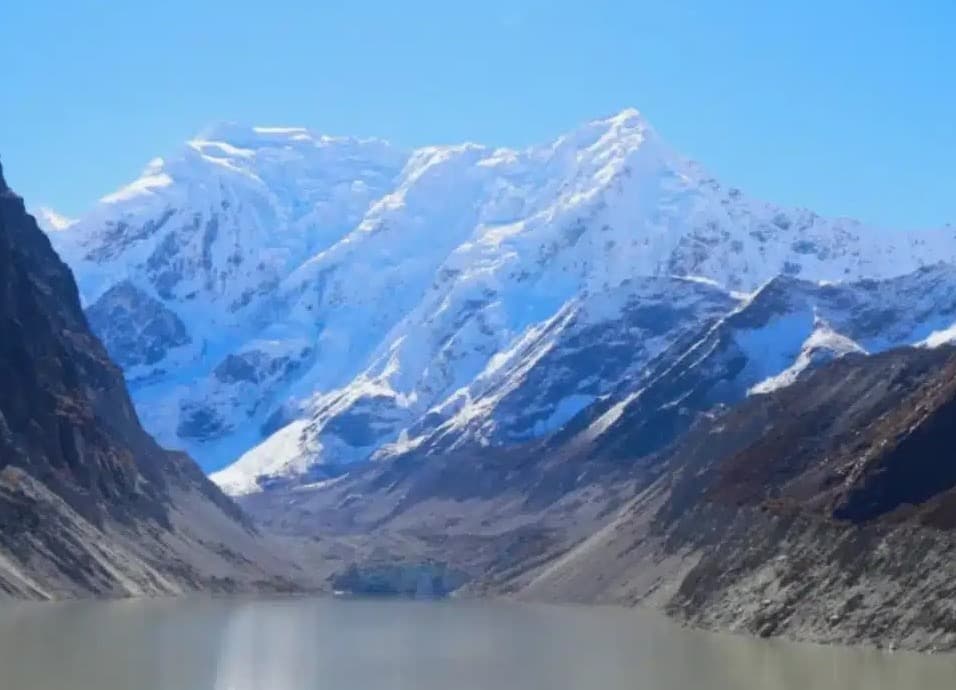
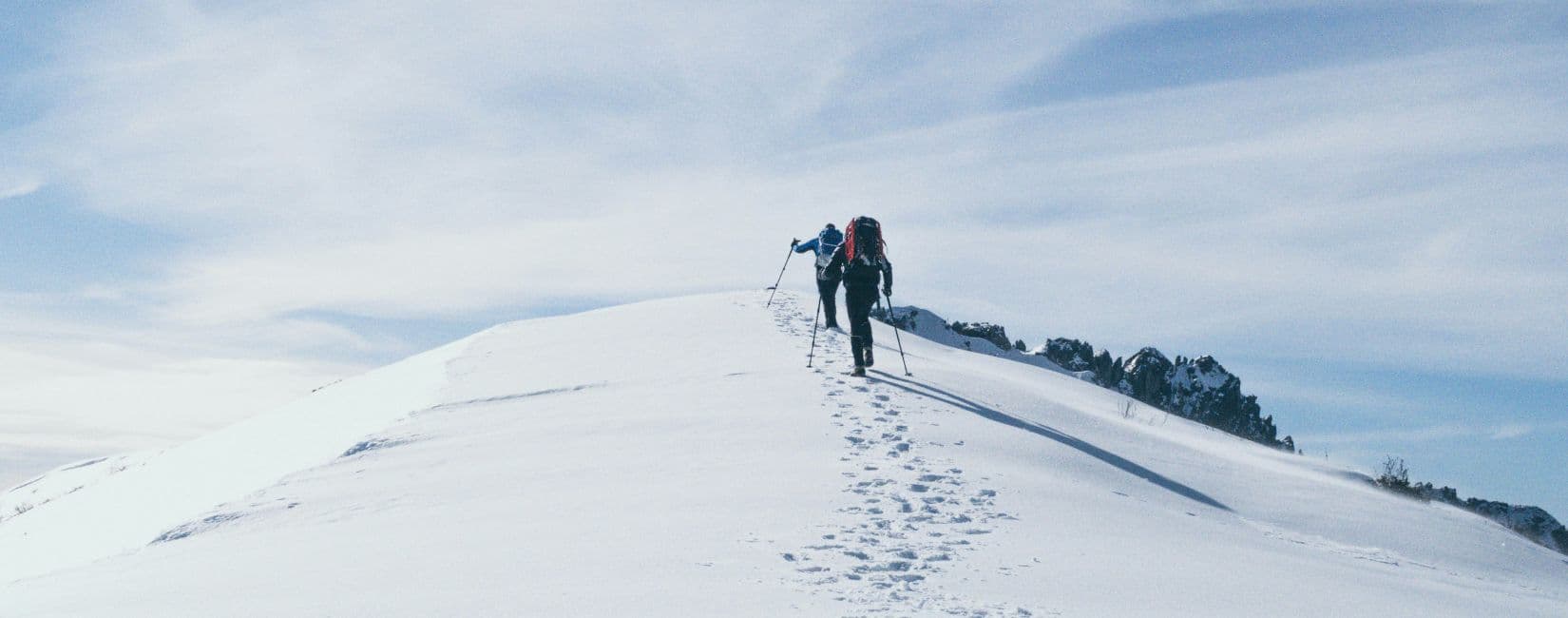
Island Peak and Lobuche Peak are two of the most renowned trekking peaks in Nepal, located above 5,000 meters (16,404.2 ft). These peaks are ideal for first-time climbers.
Both mountains offer a blend of challenge and stunning panoramas. You can gain experience in mountaineering by climbing either of the summits without attempting a higher mountain expedition above 7,000 m (22,965.88 ft).
They're close to Everest Base Camp (EBC). Therefore, climbers mostly reach the EBC first for acclimatisation, making it easy on the summit day. However, climbers often find themselves in a dilemma when it comes to choosing one of them to enter the world of mountaineering.
Since both peaks are located in the Everest Region, they share many similarities. The routes leading to both summits go through Sagarmatha National Park and traditional Sherpa villages, and also the snow-capped giants, such as Mt. Everest, Lhotse, and Ama Dablam, accompany you throughout the journey.
Nevertheless, the climbing difficulty, their altitudes, and the climbing cost make a difference. In this guide, you'll understand their comparison in detail, making it easy for you to choose one of them before your adventure.
Island Peak Vs Lobuche Peak Height And Location
Speaking of height, Island Peak rises to 6,189 m (20,305.12 ft) and Lobuche Peak to 6,119 m (20,075.46 ft). The height difference between these two isn't so huge.
Both are located in the same district and province of eastern Nepal, Solukhumbu District and Koshi Province, in the Khumbu Region. The entire region is renowned for Sherpas, trekking, and mountaineering.
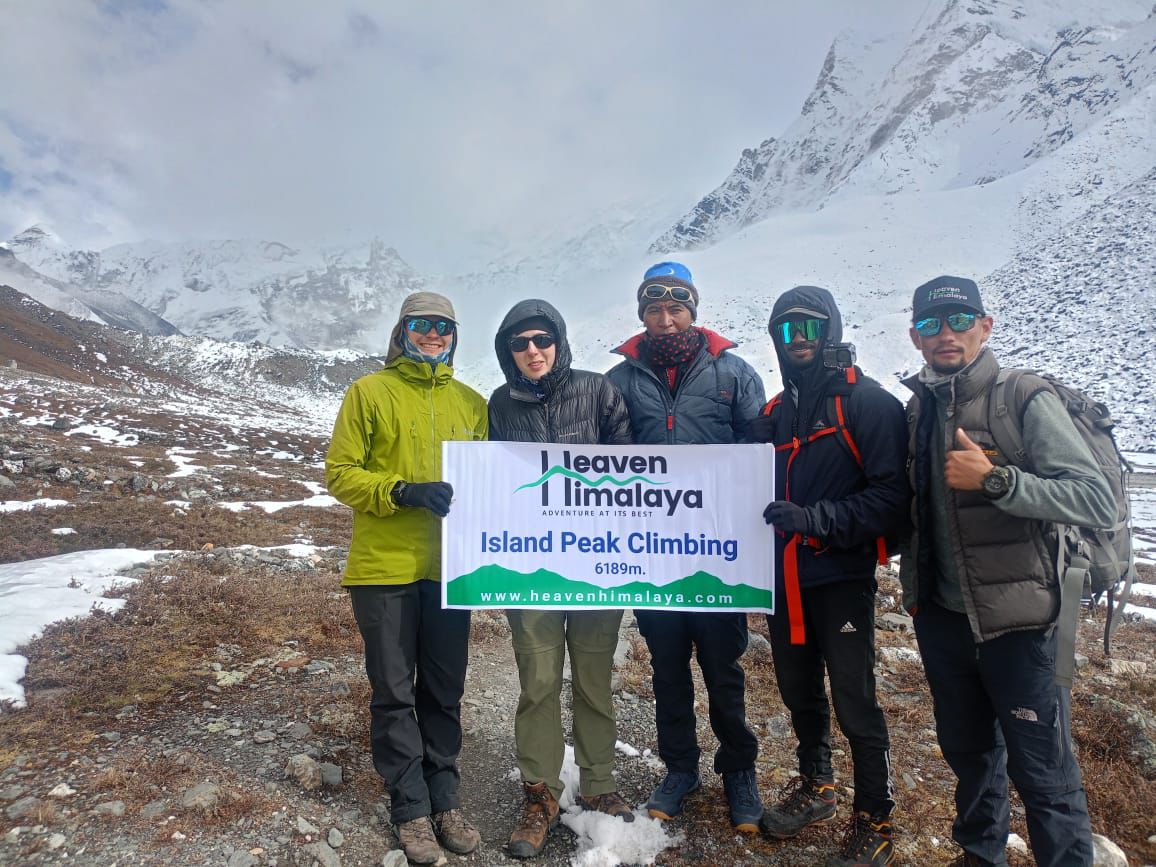
Both mountains are near the classic route leading to EBC. Within the district, Island Peak is close to Chhukung Valley, and Lobuche Peak is close to Lobuche Village (also known as Lobuche Base Camp), which is along the EBC trail. Therefore, if you also want to experience mount climbing while trekking, you can add either of them to your adventure.
Note: Lobuche Peak actually has two summits: east and west. Lobuche East is classified as a trekking peak, and Lobuche West is an expedition peak. Since we're discussing the Himalayan trekking peaks located in Nepal in this blog, the mentioned height of Lobuche refers to the east summit.
Island Peak Vs Lobuche Peak Difficulty
Island Peak is moderately difficult. Its climb involves glacier travel, ladder crossing over crevasses, and a 40 to 50-degree steep ice wall near the top.
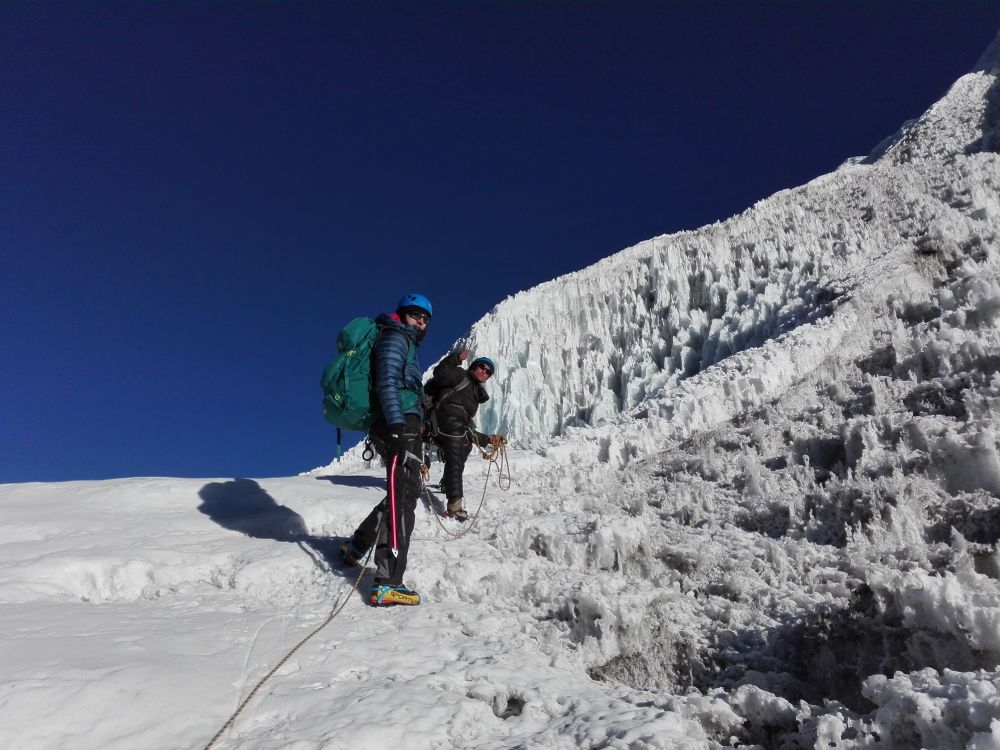
Lobuche East Peak, on the other hand, is moderate to challenging in difficulty, which means it's slightly more technical compared to Island Peak. Although it's lower than Island Peak, the journey to its summit includes steep snow slopes, exposed rock and ice walls, and a narrow ridge near the top.
Despite their different difficulty levels, both are still considered excellent choices for first-time climbers. If you're a beginner, you can attempt either of them for climbing a peak in the Everest Region. However, you're required to have good fitness and at least basic mountaineering skills, such as using crampons, a harness, an ice axe, and a fixed rope, for a safe expedition.
Island Peak Vs Lobuche Peak Route And Climbing Experience
Both Peaks are generally done combinedly with Everest Base Camp Trek. The Island Peak expedition officially starts from Chhukung Village. From there, you hike to its base camp and prepare for the summit push.
It normally takes 10 to 12 hours round-trip on the summit day, which begins at midnight, around 2 A.M. To reach its top, you need to exercise caution while ascending by using crampons, an ice axe, a ladder, and ropes, as the path is thoroughly rocky and includes glacier, crevasses, and a 40 to 50-degree steep ice wall.
For Lobuche East Peak, the journey starts from Lobuche Village. From there, you ascend to high camp to rest until midnight. Also, here, the summit push begins around 2 A.M. and takes the same time to complete the expedition as the Island Peak.
By using fixed ropes, you ascend a steep ice headwall and then cross the exposed, narrow ridge to reach the summit. You need to be very careful with your footwork and maintain balance while climbing up. These steeper slopes and ridge sections give you a more challenging experience at high elevation than Island Peak.
Island Peak Vs Lobuche Peak Cost
The cost of the Island Peak and Lobuche Peak expeditions is almost the same. The reason is the climbing route and other services, such as permits, Sagarmatha National Park entry fees, guide and porter, food, accommodation, and a domestic two-way flight from Kathmandu to Lukla are all similar.
The total price of the peak climbing package with EBC Trek generally ranges from USD 2,800 to 3,500 per person. It covers permit cost, transportation, park entry fees, food, lodging, and guides' daily wages. However, the package cost also gets affected by these factors:
Group vs Private Trip: The package cost highly depends on the group size. The larger the group, the cheaper the price. Private trips are supposed to be more expensive than group trips.
Gear Rental: Renting gear for climbing instead of buying new gear directly can help you control your expenses.
Expedition Service: The price also varies depending on the level of service you choose for the expedition, such as the type of food and accommodation along the trail and the number of porters you hire.
Island Peak And Lobuche Peak Itinerary
Island Peak Day-by-Day Itinerary (17 Days)
Day 01: Arrival in Kathmandu (1,400 m / 4,593 ft)
Day 02: Fly to Lukla (2,860 m / 9,383 ft) and trek to Phakding (2,652 m / 8,699 ft, 3 hrs)
Day 03: Trek to Namche Bazaar (3,440 m / 11,283 ft, 6 hrs)
Day 04: Acclimatization hike to Everest View Hotel (3,865 m / 12,680 ft, 3 hrs)
Day 05: Trek to Tengboche (3,860 m / 12,660 ft, 5–6 hrs)
Day 06: Trek to Dingboche (4,410 m / 14,464 ft, 5–6 hrs)
Day 07: Trek to Lobuche (4,910 m / 16,105 ft, 5 hrs)
Day 08: Trek to Gorekshep (5,181 m / 16,994 ft), visit Everest Base Camp (5,364 m / 17,594 ft), return Gorekshep (7–8 hrs)
Day 09: Hike to Kalapattar (5,545 m / 18,188 ft) and trek to Chhukung (4,730 m / 15,518 ft, 5–6 hrs)
Day 10: Rest and acclimatization in Chhukung (4,730 m / 15,518 ft)
Day 11: Trek to Island Peak Base Camp (5,240 m / 17,187 ft, 6 hrs)
Day 12: Summit Island Peak (6,189 m / 20,300 ft) and return to Chhukung (9–10 hrs)
Day 13: Contingency day
Day 14: Trek back to Namche (3,440 m / 11,283 ft, 7–8 hrs)
Day 15: Trek back to Lukla (2,800 m / 9,184 ft, 7–8 hrs)
Day 16: Fly back to Kathmandu (1,400 m / 4,593 ft)
Day 17: Departure from Kathmandu
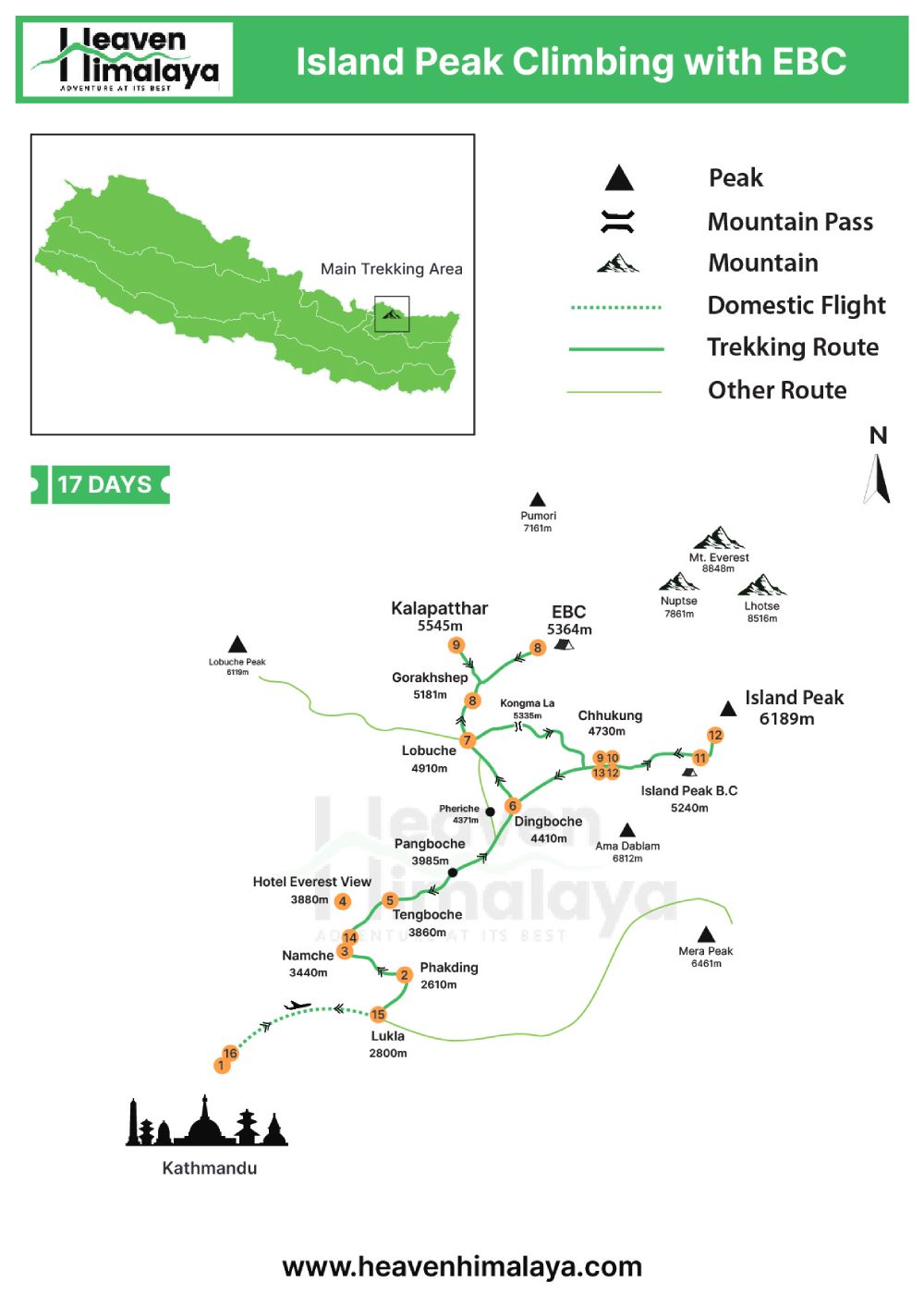
The route usually follows the Everest Base Camp trail through Lukla, Namche, Tengboche, and Dingboche before branching toward Chhukung and Island Peak Base Camp.
Lobuche East Peak Climbing Itinerary (18 Days)
Day 1: Arrival in Kathmandu (1,400 m / 4,593 ft)
Day 2: Fly to Lukla (2,860 m / 9,383 ft), trek to Phakding (2,610 m / 8,563 ft)
Day 3: Trek to Namche Bazaar (3,440 m / 11,286 ft)
Day 4: Acclimatisation day at Namche Bazaar
Day 5: Trek to Tengboche (3,867 m / 12,687 ft)
Day 6: Trek to Dingboche (4,410 m / 14,468 ft)
Day 7: Acclimatisation day at Dingboche
Day 8: Trek to Lobuche (4,940 m / 16,207 ft)
Day 9: Trek to Everest Base Camp (5,364 m / 17,598 ft), return to Gorak Shep (5,164 m / 16,942 ft)
Day 10: Hike to Kala Patthar (5,545 m / 18,192 ft), trek back to Lobuche
Day 11: Trek to Lobuche Base Camp (about 4,950 m / 16,240 ft)
Day 12: Climb to High Camp (about 5,400 m / 17,717 ft) and preparation for the summit
Day 13: Summit Lobuche Peak (6,119 m / 20,075 ft) and descend to base camp
Day 14: Trek to Pheriche (4,371 m / 14,340 ft)
Day 15: Trek to Namche Bazaar
Day 16: Trek to Lukla
Day 17: Fly back to Kathmandu
Day 18: Departure from Kathmandu

Best Time to Climb Island Peak and Lobuche Peak
The best time to climb Island Peak and Lobuche Peak is during spring (March–May) and autumn (September–November). These seasons are the most popular for Himalayan climbing because the weather in the Everest region is generally stable and predictable. Many climbers plan their expeditions during these months to increase their chances of reaching the summit successfully.
Spring and autumn usually offer clearer skies, better visibility, and safer climbing conditions. The snow is more stable, the winds are calmer, and there are more reliable weather windows for summit attempts. These favorable conditions make it easier for you to travel on glaciers, climb steep sections, and enjoy clear views of surrounding Himalayan peaks.
Climbing is still possible in winter (December–February) and monsoon (June–August), but these seasons are much more challenging. Winter brings extremely cold temperatures and heavy snowfall, while the monsoon season causes rain, clouds, and slippery trails. Because of these conditions, most climbers avoid these months and choose spring or autumn for a safer and more enjoyable climb.
Island Peak or Lobuche Peak: Which One Should You Choose
Choosing between Island Peak and Lobuche Peak depends on your climbing experience and what kind of adventure you want. If this is your first Himalayan climb, Island Peak is usually the better choice. It is one of the most popular beginner peaks in the Everest region, with well-established routes, strong guide support, and a moderate level of technical climbing that helps climbers learn basic mountaineering skills.
On the other hand, Lobuche Peak is a better option if you want a more technical and challenging climb. The route includes steeper snow slopes, exposed ridges, and mixed rock and ice sections, making it more demanding than Island Peak. Many climbers also prefer Lobuche because it's often less crowded and offers incredible summit views of Everest and the surrounding Khumbu mountains.
In simple terms, choose Island Peak if you want a beginner-friendly first Himalayan summit, and choose Lobuche Peak if you want a more technical climbing experience with fewer crowds. For most first-time climbers in the Everest region, Island Peak is usually the best starting point before attempting more challenging peaks like Lobuche.