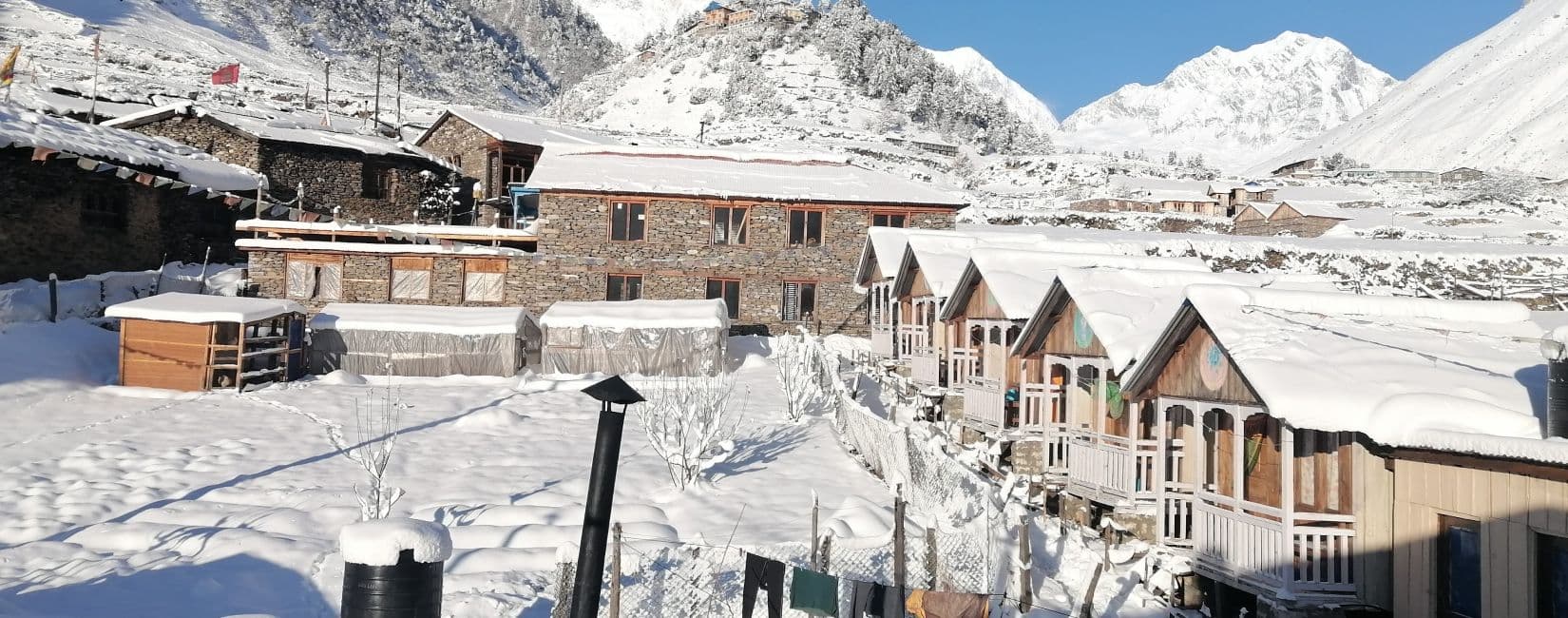
When planning the Manaslu Circuit Trek, it's also essential to consider food and accommodation, as these are crucial aspects that help you stay well-fed and rested during this two-week-long journey. Locals run the teahouses along the route, unlike luxury hotels in city areas, but in a mountain-style setting. They're simple but useful to keep you warm and energised.
The lower section of the trail is predominantly inhabited by Gurungs, and the upper section is inhabited by Tibetan Buddhists. They provide you with basic beds, warm blankets, shared bathrooms, and hygienic food.
The menu in lodges and tea houses has multiple options of dishes, including dal-bhat(rice, lentils, and vegetables), Tibetan bread, momo, and chowmein as local cuisines, and pancakes and spaghetti as Western. However, food options become limited as you reach higher due to a lack of infrastructure to supply kitchen items.
Despite the availability of simple teahouses along the way, you'll at least find a safe place to stay overnight with essentials. Such facilities make your Himalayan adventure truly convenient.
Overview Of Teahouse Accommodation On Manaslu Circuit
In terms of the accommodation option on the Manaslu Circuit Trek, it's mostly teahouses run by local families along the way. Basic twin-sharing rooms, pillows, blankets, and a mattress are all they offer to keep you safe at night.
You may also bring your own sleeping bag for extra warmth, because at high altitudes, the night is 24/7 cold. Nevertheless, it's just optional, just in case. They provide you with an extra blanket as well if a tea house isn't fully packed.
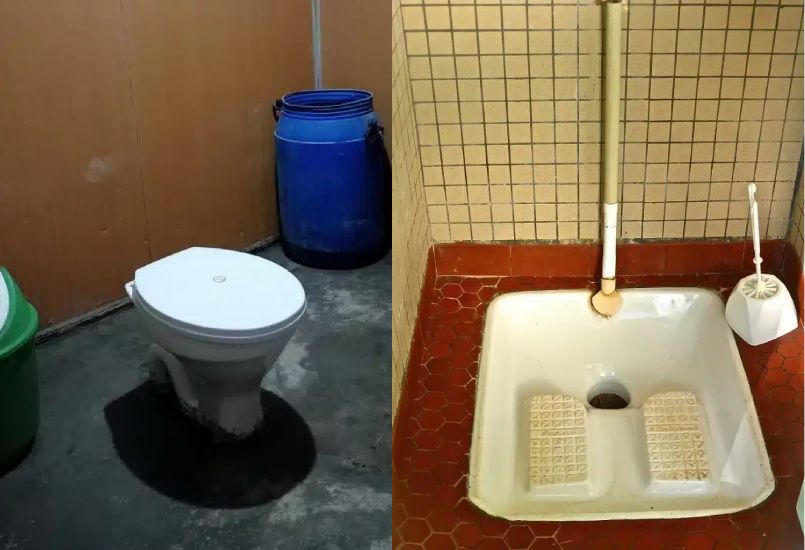
Expect to get shared bathrooms in tea houses along the route. You may get Western-stye bathroom at lower altitudes. However, the higher you go, the simpler the sanitation facilities you'll get.
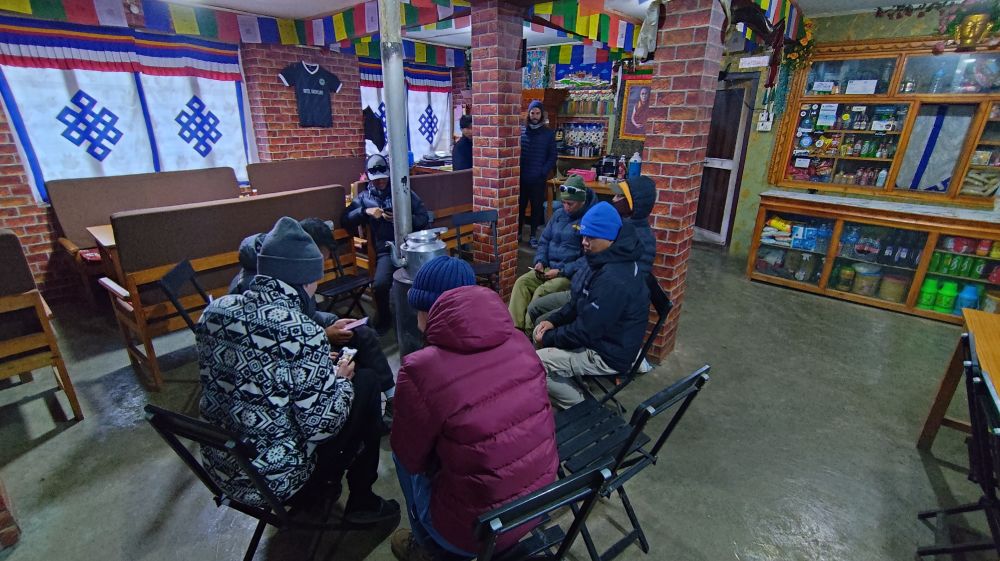
Lodges also have a common dining hall with a fire stove in the centre that keeps you warm and makes you feel comfortable while having dinner. Amenities, such as electricity, hot showers, and internet, are also available, but at an extra cost.
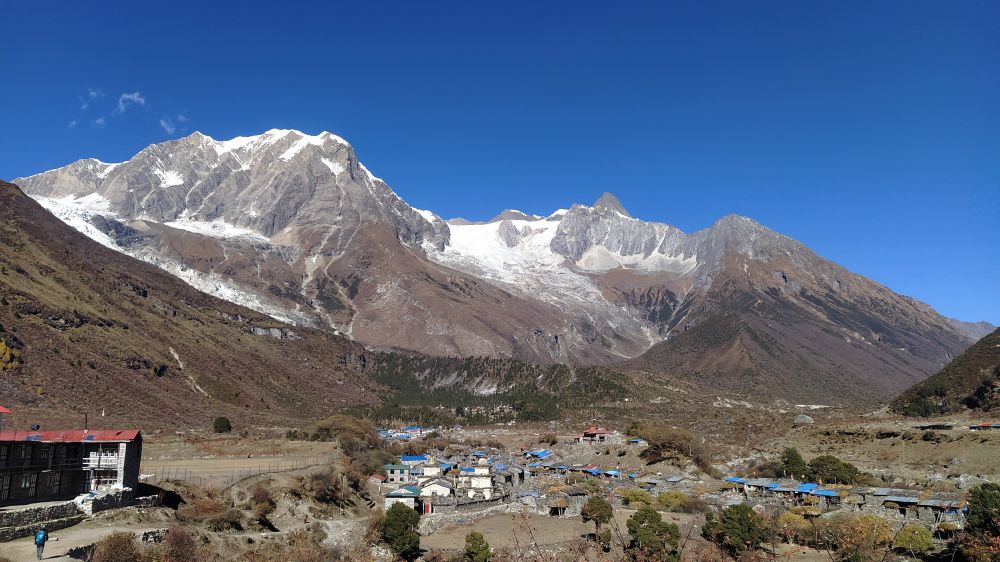
In Dharmasala (4,450 m/14,599 ft), the last stop before Larkya La (5,106 m/16,751 ft.), such things aren't available, except for electricity, which is run by a solar panel. Hence, don't expect it to be strong. It's just to keep the tea house bright to some extent.
Just know that the teahouse facilities in the Manaslu Region are simple; nonetheless, they're reliable and helpful for a successful trip. It's fortunate to have at least such facilities for shelter where you can rest, which is a huge thing, even though they aren't as strong as those in hotels in cities.
Teahouse Meal On Manaslu Circuit
Expect the food on the Manaslu Circuit Trek to be simple but hearty. It's prepared to keep you energised for long walking days rather than taste.
The menu changes with altitude, becoming more limited as you go higher. Yet, it still includes plenty of warm, nutritious options.
One of the most common and reliable meals you'll find everywhere is dal bhat, steamed rice served with lentil, vegetables, and pickle; the refill is unlimited. You can refill it as much as you want and help yourself stay fueled. For breakfast, options often include Tibetan bread, pancake, porridge, chapati, and eggs, usually served with hot tea or coffee to help kick-start your day.
Lunch and dinner menus feature noodles, fried rice, thukpa (Tibetan noodle soup), momo (dumpling), and other comfort meals, especially at lower and mid-altitude stops. As you climb higher, these choices may shrink to core staples like dal bhat, soups, and simple noodle dish, because it's harder to bring ingredients up the mountain.
Drinks like black tea, milk tea, lemon tea, and instant coffee are widely available and help you stay warm at chilly teahouses. Snacks such as biscuits, chocolate, and energy bars can be bought on the trail but tend to be more expensive and limited at higher elevations.
Local Delicacies Worth Trying On The Trail
When you're in Nepal for trekking the Manaslu Circuit, we highly recommend that you prioritise local foods over Western cuisine for your meal. You can't get the real taste of local Himalayan dishes anywhere in the world, except in Nepal. So, trying them also becomes part of your adventure.
These foods are simple but ideal for keeping you energised throughout your journey. Additionally, they represent the culture of the local ethnic groups in the country, the Gurung and Tibetan.
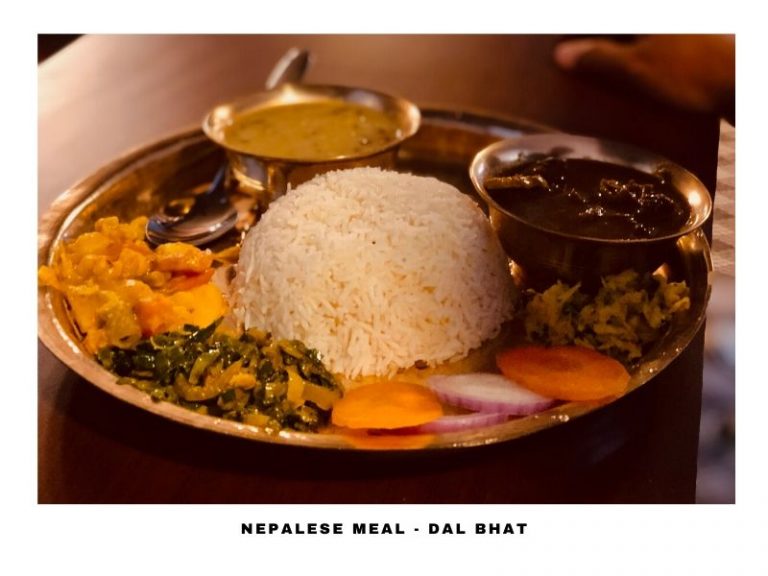
Dal Bhat
Dal Bhat is the most common meal on the Manaslu Trek. It's a traditional Nepali food item that includes rice, lentil (dal), vegetables, and pickles. You can have proper nutrition and long-lasting energy for hiking in high altitudes.
Thukpa
Thukpa is a warm Tibetan noodle soup made with vegetables and mild spices. It's particularly famous in the Himalayan region of the country. It helps you keep your body warm.
Momo
Momo is a dumpling filled with vegetables and meat made by steaming. Its standard quantity in a plate is 10 pieces and served with a spicy dipping sauce.
It's a favourite snack or meal of Nepalese. Not official, but you can consider it the national dish.
Tibetan Bread
Tibetan Bread is a thick, deep-fried flatbread. It's crispy on the outside, but actually soft inside. It's one of the best dishes in the country for breakfast, usually served with honey or jam.
Gundruk
Gundruk is a dry leafy green that tastes slightly sour and tangy. It's used to make both vegetables and pickles in Nepal. It's one of the country's traditional foods that adds a unique flavour to meals.
Manaslu Circuit Trek Food And Accommodation Costs
The food and lodging on the Manaslu Circuit Trek are normally reasonable. However, the higher you go, the prices rise accordingly.
The cost is cheaper in the lower sections, such as Machha Khola (760 m/2,493 ft.) and Jagat (1,340 m/4,396 ft.). While in the upper sections, like Samagaun (3,530 m/11,581 ft) and Dharmasala (4,450 m/14,599 ft), it's slightly more. This is because supplies are carried by humans or animals, such as donkeys, horses, or yaks.
As discussed above, tea houses along the route are simple. They offer basic twin-sharing rooms with shared bathrooms. The costs per night are approximately USD 5 to 15, which also depends on the village and facilities you use.
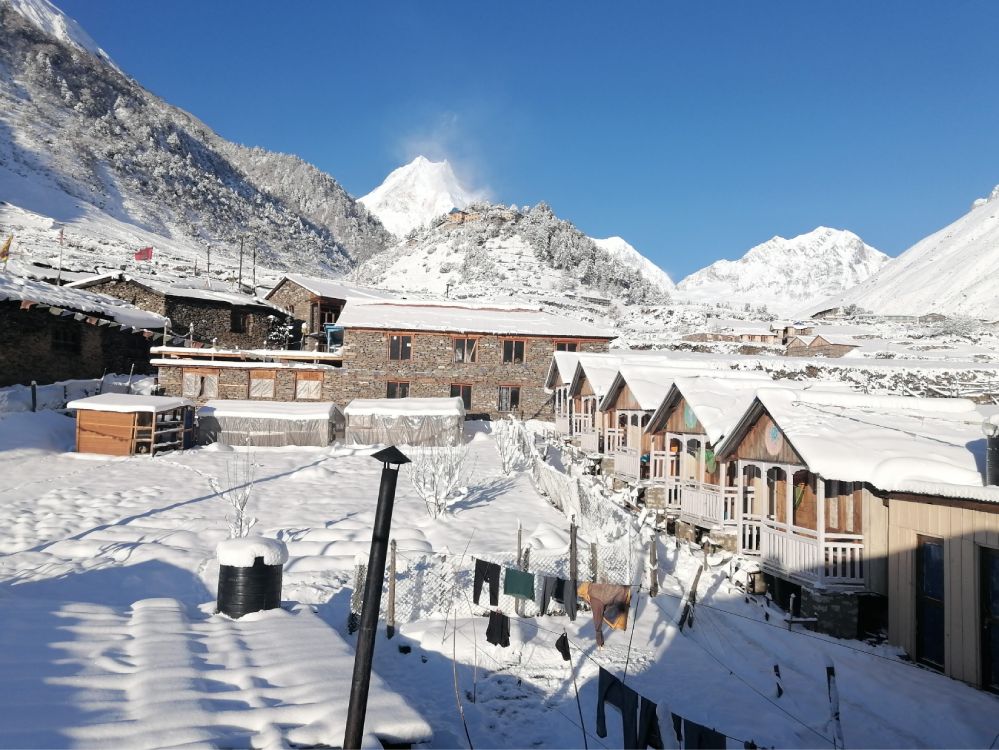
Regarding food cost, it also depends on the elevation and the food option you choose from the menu. A local item, such as dal-bhat, fried rice, or momo, can cost around USD 4 to 10, and Western foods for breakfast, like pancakes or porridge, may cost USD 3 to 6. Hot beverages, such as tea, coffee, or hot lemon water, cost between USD 2 and 5.
Overall, your total expenditure per day during the journey can go from USD 25 to 40, which covers both food and accommodation. Using services like hot showers, internet, and charging electronic gadgets require small but extra amount.
Facilities And Additional Amenities In Teahouses
Teahouses along the trail of the Manaslu Trek are simple but provide useful facilities to help you rest and stay warm at night after a day hiking for hours. You can get shared bathrooms, dining halls with a fire stove in the centre, and a charging point for electric devices.
Power may be limited, especially at higher altitudes, as electricity comes from solar panels or small generators. That's why they charge extra for using hot showers, Wi-Fi, and charging gadgets. Nevertheless, these services aren't always available in such areas.
Your stay will be in shared rooms with two simple beds in teahouses. Shower and Toilet facilities are also basic. In the evening, the staff light the fire in a stove, and you can enjoy dinner in a warm hall. Trekkers usually gather there and share their experiences with each other.
Tips For Smart Eating & Lodging On The Trek
Below are some useful tips for having food and accommodation on the Manaslu Trek:
- Choose freshly cooked and hot meals in teahouses, as they're usually safer and easier to digest.
- Prefer dal bhat daily, as it's nutritious, filling, and provides energy that lasts long.
- Don't drink water directly from taps or streams. Boil or purify it first before drinking.
- Bring snacks such as dry fruits, chocolate, cookies, or protein bars to collect energy while hiking.
- Consider eating meals in the same teahouse where you stay for the night. Doing so helps support local businesses.
- While ordering food, inform the teahouse staff if you have any health issues so they can prepare a meal according to your preference.
- Avoid over-fried, oily, and non-vegetarian foods because they may cause food poisoning.
- Carry basic hygiene stuff, such as hand sanitiser and wet tissue papers, to maintain cleanliness.
- Following these simple tips will help you stay safe, comfortable, and well-fed throughout the trek.
Conclusion
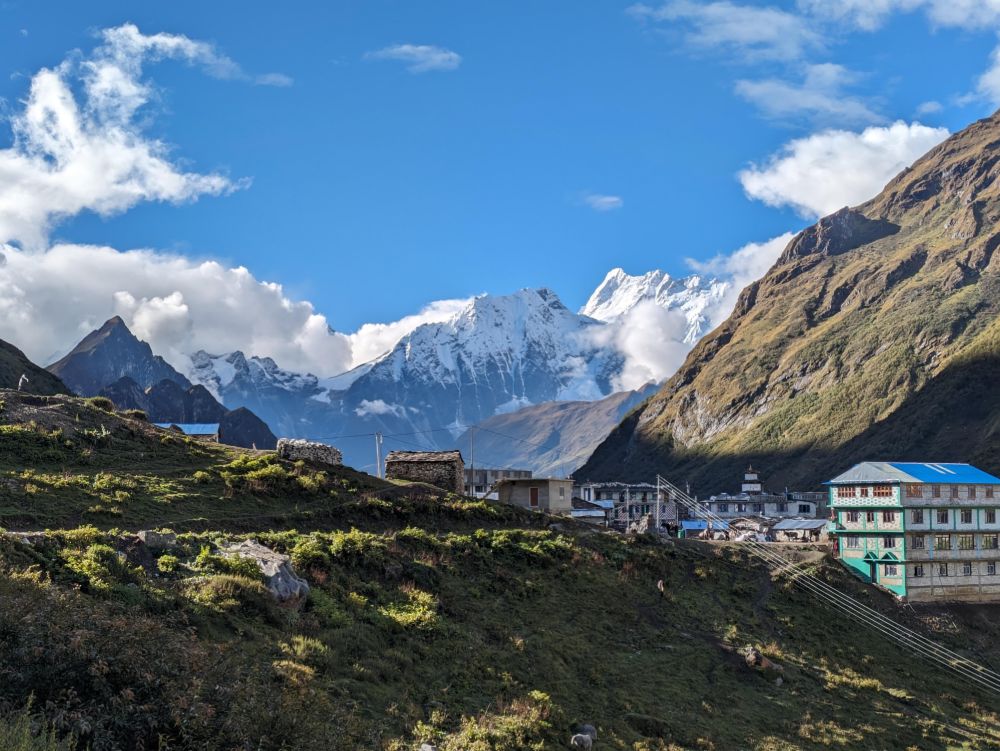
Expect food and accommodation on the Manaslu Circuit Trek to be simple. Nevertheless, they're comfortable enough for making your Himalayan adventure successful.
Teahouses are mostly run by local families, offering basic twin-sharing rooms, shared bathrooms and a warm dining hall. They serve hygienic foods, such as dal bhat, momo, chowmein, pancakes, and Tibetan bread, providing you with enough energy required for long hiking days.
Food choices and facilities become more basic as you go higher because supplies are harder to transport to remote villages, but the meals remain nutritious and satisfying. Overall, with proper expectations and a flexible mindset, the food and lodging on this trek offer a comfortable place to rest while enjoying the authentic culture and hospitality of the Himalayan people.