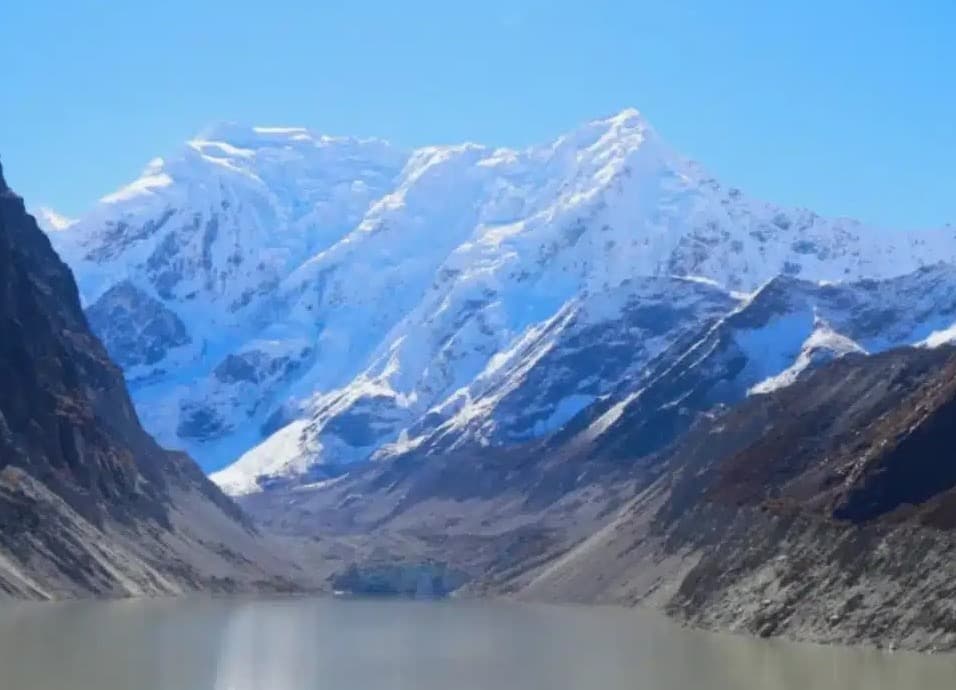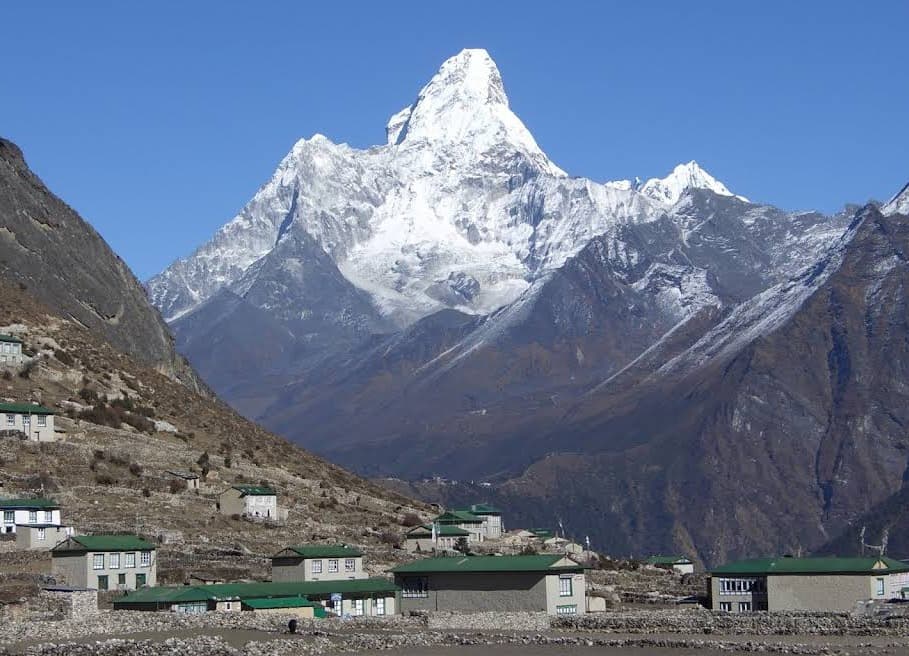
Most trekkers rush toward Everest Base Camp (EBC), but few realise there's another trail in the same region that feels quieter, more raw, and honestly a bit more personal, and that's the Ama Dablam Base Camp Trek. It's one of those journeys where the crowd slowly fades away, and the Himalayas start feeling more real and closer than ever.
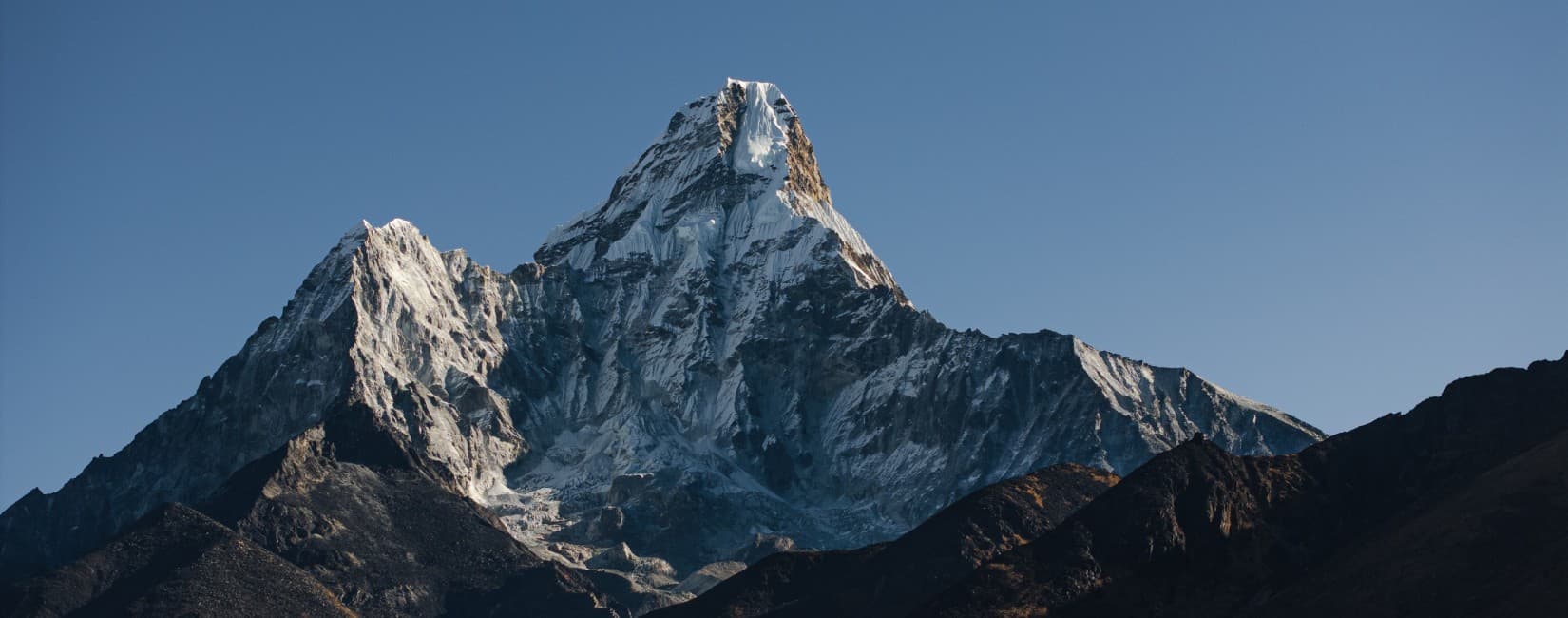
This trek lies deep within the Everest region of Nepal and takes you through the heart of the Khumbu Valley. Instead of following only the busy main trail, you branch off toward the base of Ama Dablam (6,812 m/22,349 ft), one of the most iconic and beautiful peaks in the Himalayas.
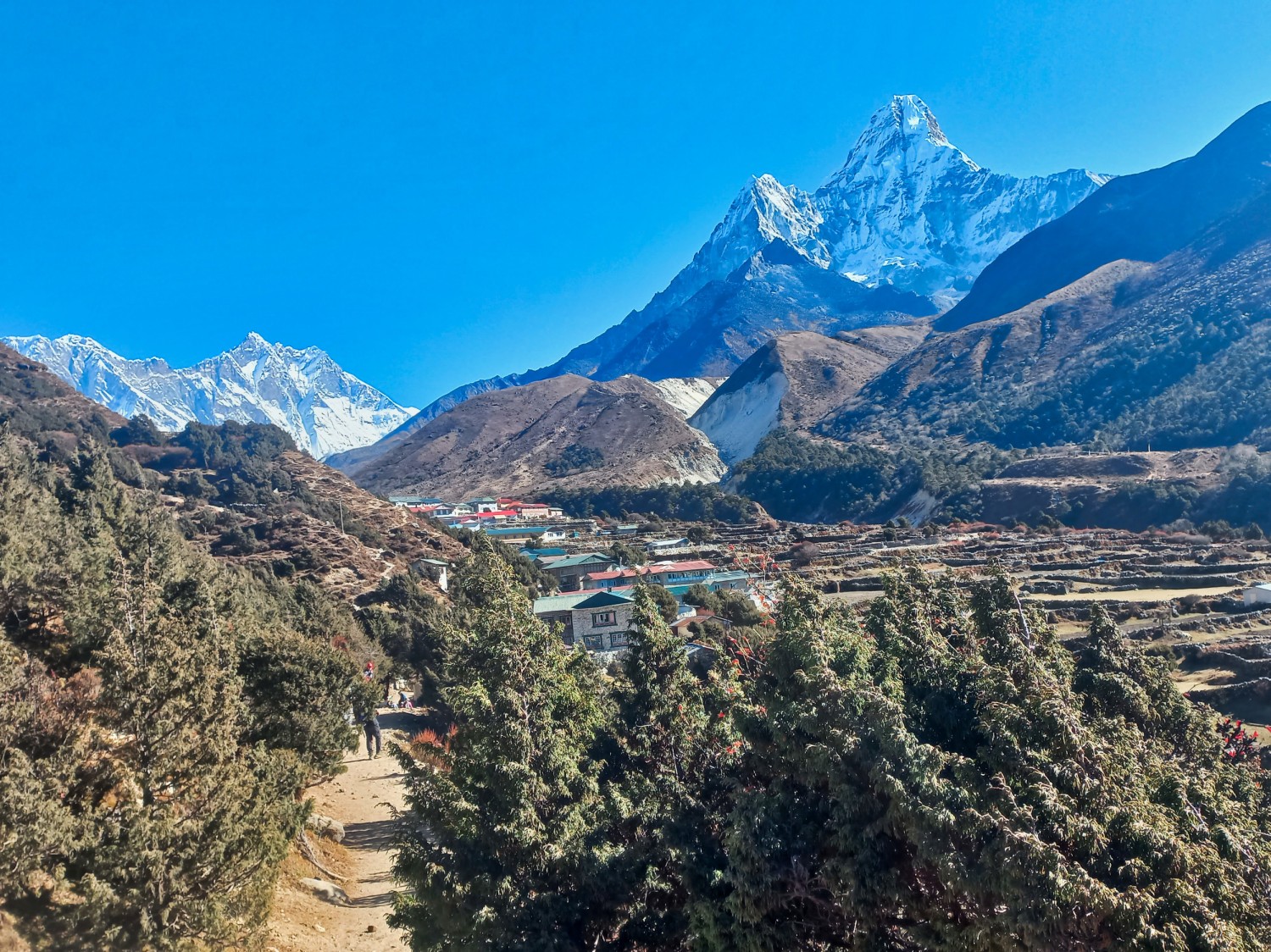
The best part is that the trails are still authentic. Small Sherpa villages, prayer flags, suspension bridges, and peaceful mountain atmosphere along the way aren't highly commercialised yet.
In this blog, you'll get everything you need to understand the trek properly, including the day-by-day itinerary, real cost breakdown, difficulty level, and the best time to go. Basically, think of this as a complete guide to help you decide if this trek is your kind of adventure. Now let's get into the details.
Why Choose The Ama Dablam Base Camp Trek
If you compare it with the EBC Trek, both are in the Khumbu Region, and honestly, both are stunning. However, the main difference is the vibe.
EBC can feel busy most of the time, while the benefits of the Ama Dablam Base Camp Trek really come from how calm and peaceful the whole trail feels. It's basically the same Himalayan beauty, just without the crowd rushing beside you.
What makes this trek really special is the experience on the ground. You walk through quiet trails, pass small Sherpa villages that still feel very real, and slowly get closer and closer to Ama Dablam until it starts dominating your view. It's one of those less crowded treks in the Everest Region where you actually get time to stop, breathe, and take in the mountains instead of just passing through them.
And honestly, that's what makes people remember this trek later. Not just the destination, but the feeling of walking in a peaceful corner of the Himalayas where everything feels a bit slower, simpler, and more real.
Itinerary Overview
The itinerary of the Ama Dablam Base Camp Trek follows a classic trekking route through the Khumbu Valley, slowly leading you from a warm river into the high Himalayas, where everything starts to feel quieter, colder, and honestly a bit more unreal.
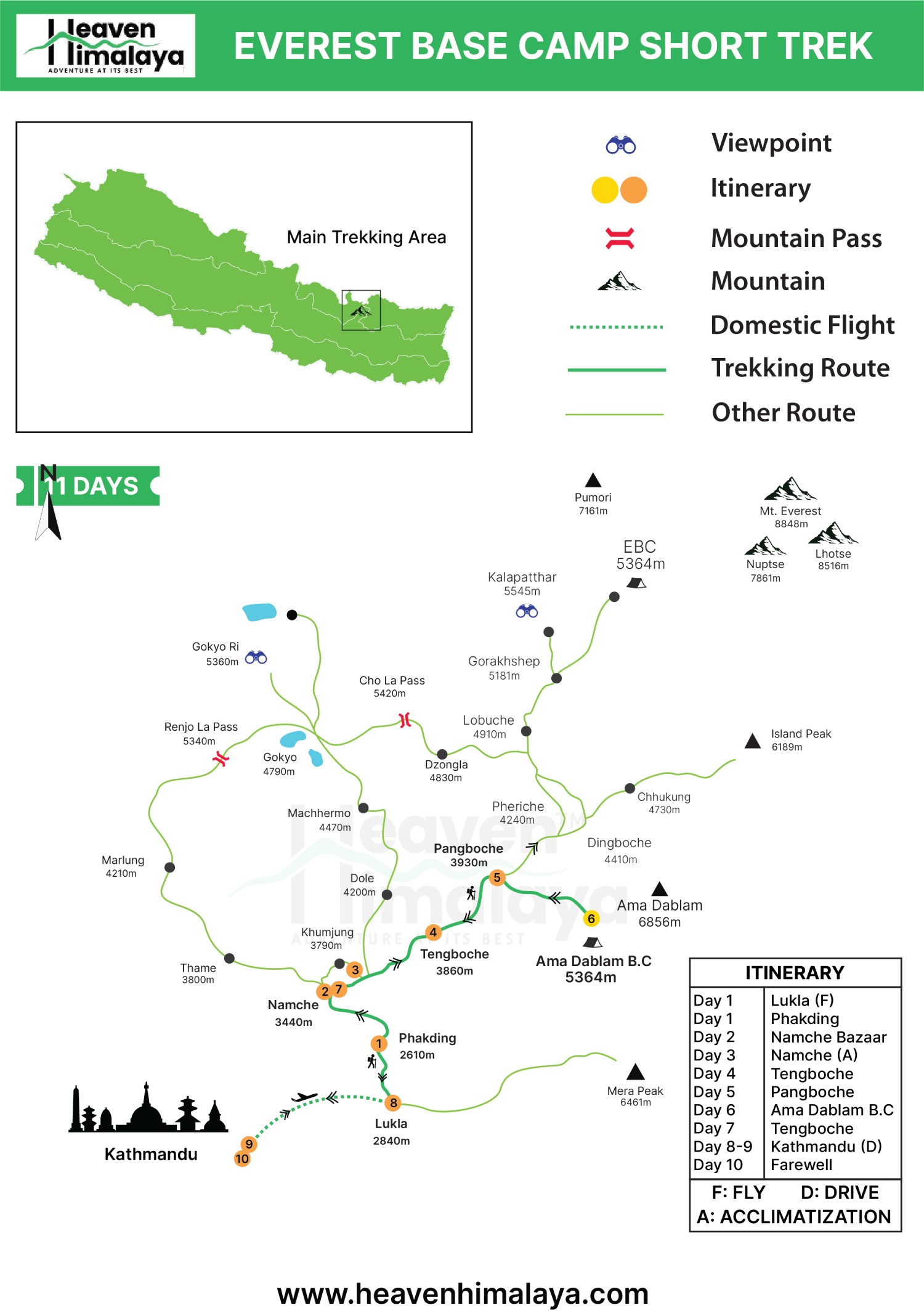
Day 1: Fly to Lukla (2,860 m / 9,383 ft) and trek to Phakding (2,610 m / 8,563 ft), an easy walk along the Dudh Koshi River to start the journey.
Day 2: Trek uphill to Namche Bazaar (3,440 m / 11,286 ft), entering the main trading hub of the Everest Region.
Day 3: Acclimatisation hike around Namche Bazaar (3,440 m / 11,286 ft) with short walks to higher viewpoints.
Day 4: Trek to Tengboche (3,860 m / 12,664 ft) through forests and open mountain trails.
Day 5: Continue to Pangboche (3,985 m / 13,074 ft), moving deeper into quieter Sherpa settlements.
Day 6: Reach Ama Dablam Base Camp (4,600 m / 15,091 ft), the main highlight of the trek.
Day 7: Descend back to Namche Bazaar (3,440 m / 11,286 ft), retracing peaceful Himalayan trails.
Day 8–10: Return journey back via Phakding (2,610 m / 8,563 ft) and Lukla (2,860 m / 9,383 ft), then fly to Kathmandu (1,400 m / 4,593 ft).
Difficulty & Fitness Level
The difficulty of the Ama Dablam Base Camp Trek is best described as moderate. It's not a technical climb. Therefore, you don't need any mountaineering skills or ropes, just a good pair of legs and the willingness to walk for a few hours each day on mountain trails.
What really makes it feel challenging is the elevation, not the distance. As you reach higher, your body starts working differently.
Breathing becomes a bit heavier, your walking pace naturally slows down, and even small uphill sections can feel more tiring than they would at lower elevations. This is usually where people start noticing signs related to altitude sickness when trekking in Nepal, which is why going slow and not rushing is so important.
But honestly, you don't need to be an expert trekker to do this. If you can walk regularly, have decent fitness, and you're mentally ready for some long trekking days, you can complete it. Even first-timers can do this trek; it's more about patience and steady walking than any special trekking experience.
Best Time To Trek
The best time for the Ama Dablam Base Camp Trek really depends on what kind of experience you want, but most trekkers usually aim for the two main trekking seasons when the weather is stable, and the mountains look their best.
Spring (March To May)
It's one of the most beautiful times to go. The weather is fairly stable, skies are often clear, and the trails come alive with blooming rhododendrons and greenery.
You also get really good visibility of Ama Dablam and the surrounding peaks, especially in the mornings. It's a great time if you enjoy a mix of colourful landscapes and comfortable trekking conditions.
Autumn (September To November)
It's generally considered the best season overall. The skies are crystal clear after the monsoon, the weather is stable, and the mountain views are at their sharpest.
This is also the most popular trekking period, especially for autumn trekking in the Everest Region, because everything just feels perfectly balanced: temperature, visibility, and trail conditions.
Monsoon (June To August)
It isn't really recommended. The trails get wet and slippery, clouds often block the mountain views, and rainfall can make the journey less enjoyable. It's quieter, but the visibility is usually not worth it.
Winter (December To February)
This season offers a different kind of experience. It gets quite cold, and higher sections may have snow, but the trails are peaceful with very few trekkers around. If you don't mind the cold and want solitude in the mountains, this can actually feel very special.
Cost Section
The cost of the Ama Dablam Base Camp Trek can vary depending on group size, season, and the level of services you choose. A shared group trek is often more affordable, whereas private or upgraded services tend to be more expensive.
The main expenses include Lukla flights, guide and porter fees, trekking permits, and daily food and lodging in teahouses. All of these together make up the overall cost of the Everest trekking package, especially in remote Himalayan regions.
At the end of the day, you're not just paying for a trek. You're paying for a full Himalayan experience, including logistics, safety, and support in a very remote mountain area.
Accommodation & Food
On this trek, you'll be staying in local lodges, which is all part of the teahouse trekking experience in Nepal. The rooms are simple, usually twin beds with blankets, but comfortable enough after a long day of walking.
As you go higher, things get more basic, and shared bathrooms become the standard. Nevertheless, honestly, it all feels part of the adventure.
When it comes to food, you'll be surprised by the variety. You'll find staples like Dal Bhat, noodles, soups, eggs, and simple fried rice along the way.
Most meals are freshly prepared, and that really matters at altitude, where your body needs clean, filling food. That's why food when trekking in the Himalayas is usually simple but energy-packed.
And this is where the real experience kicks in: cold mornings, chilly nights, and then sitting in a warm dining hall with a hot meal in front of you. It's simple, no doubt, but there's something about that mountain lifestyle that just feels real and memorable.
Permits
You'll need a couple of basic permits for trekking in the Everest region in Nepal. The main one is the Sagarmatha National Park entry permit, and the other is the Khumbu Pasang Lhamu Rural Municipality permit.
These permits are there to help manage trekking activities and protect the environment of the Everest Region. So, while it might feel like just another formality, it actually plays a role in keeping the trails, villages, and nature well-preserved for everyone.
The good part? If you're going with a guide or agency, they usually handle all the permit arrangements for you, so you don't have to worry about the process.
Altitude & Safety
On this trek, the biggest challenge isn't the trail; it's the altitude. As you move higher into the mountains, your body needs time to adjust to thinner air, which is why taking things slow becomes really important. This is where most people need to focus on proper prevention of altitude sickness in Nepal.
You might notice simple symptoms, such as a mild headache, feeling more tired than usual, or needing to walk slower than you normally would. That's completely normal at higher elevations. The key is to listen to your body and not push too hard, even if you feel okay at the start.
For good safety when trekking at high altitudes, keep things simple: walk at a steady pace, drink plenty of water, and don't skip acclimatisation days. Trekking isn't a race up here, and the more patient you are, the smoother and safer your experience will be.
Who's This Trek For
If you're someone with decent fitness and can walk for a few hours a day, this can easily be your beginner trek in Nepal's Himalayas. You don't need prior trekking history, just a bit of stamina, patience, and the mindset to go slow and steady in the mountains.
If you're into capturing landscapes, this adventure is honestly a dream. From close-up views of Ama Dablam to quiet trails and traditional villages, it's perfect for photography trekking in Nepal, where you actually get time and space to take it all in without crowds rushing you.
And if you've already done popular routes and now want something quieter, this one just hits differently. Fewer people, more peaceful trails, and a more personal connection with the mountains, it's ideal if you're looking to experience the Everest Region in a calmer way.
Conclusion
There's something about this trek that stays with you long after it's over. Maybe it's the quiet trails where you can actually hear the wind, or the way Ama Dablam slowly gets closer until it feels almost unreal.
The whole experience of the Ama Dablam Base Camp Trek is less about ticking off a destination and more about feeling the mountains in a raw, unfiltered way, something that's getting harder to find on busier routes in the Khumbu Region.
If that kind of journey sounds like your thing, it might be time to take the next step. Whether you're planning ahead or just exploring options for your next adventure in the Everest Region of Nepal, you can always reach out, ask questions, or look into available trekking packages. Sometimes, the best trips begin with a simple decision to go for it.