If Everest Base Camp (EBC) feels a little too crowded or you're craving a real adventure that pushes your limits, the Everest Three High Passes Trek is exactly what you need. This isn't your everyday trek, crossing three high-altitude passes above 5,000 m (16,404.2 ft); it's widely considered one of the most challenging ones in the Everest region.
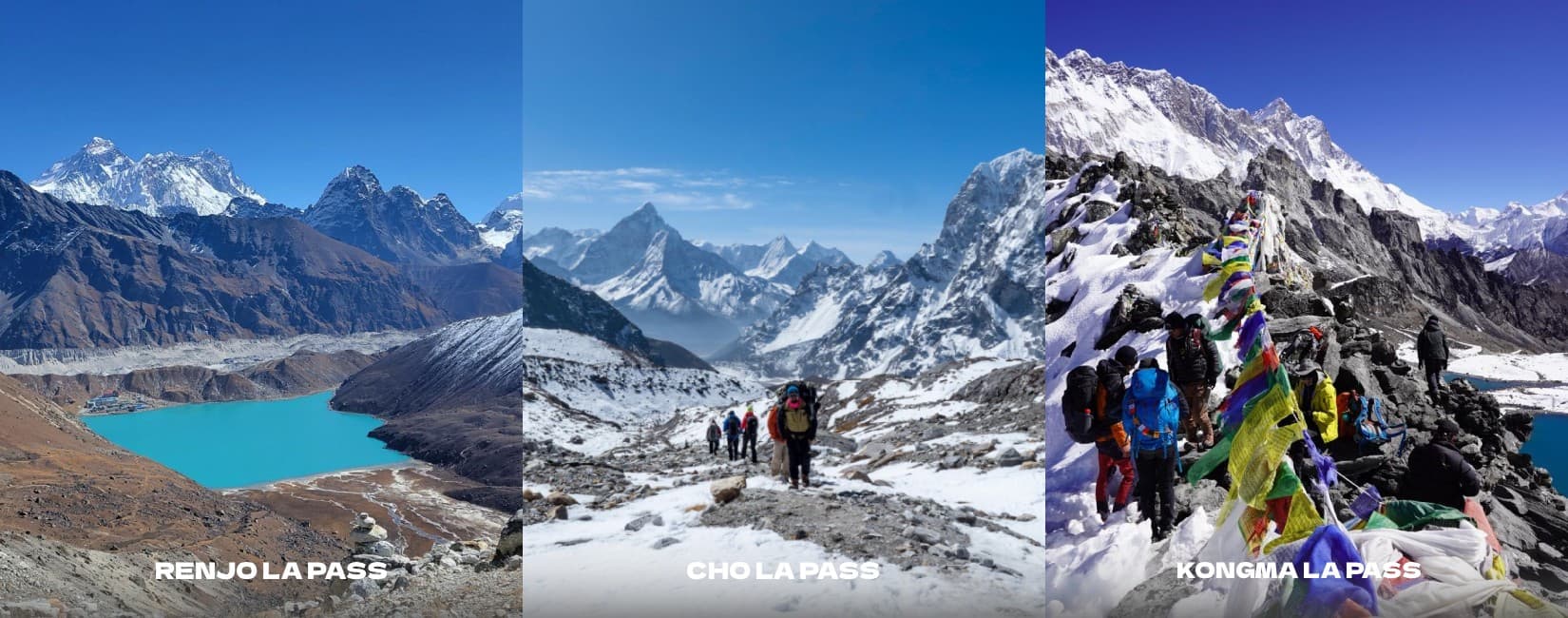
The journey takes you through awe-inspiring landscapes, less-travelled trails, and some of the most iconic views of the Himalayas. You'll conquer Kongma La, Cho La, and Renjo La passes, enjoy the serenity of remote villages, and soak in a complete Everest experience without the usual crowds.
This trek is ideal for adventure seekers and experienced trekkers seeking more than just a snapshot of Everest. In this guide, we'll cover everything from a day-by-day itinerary and costs to difficulty levels and essential tips to make your journey safe and unforgettable.
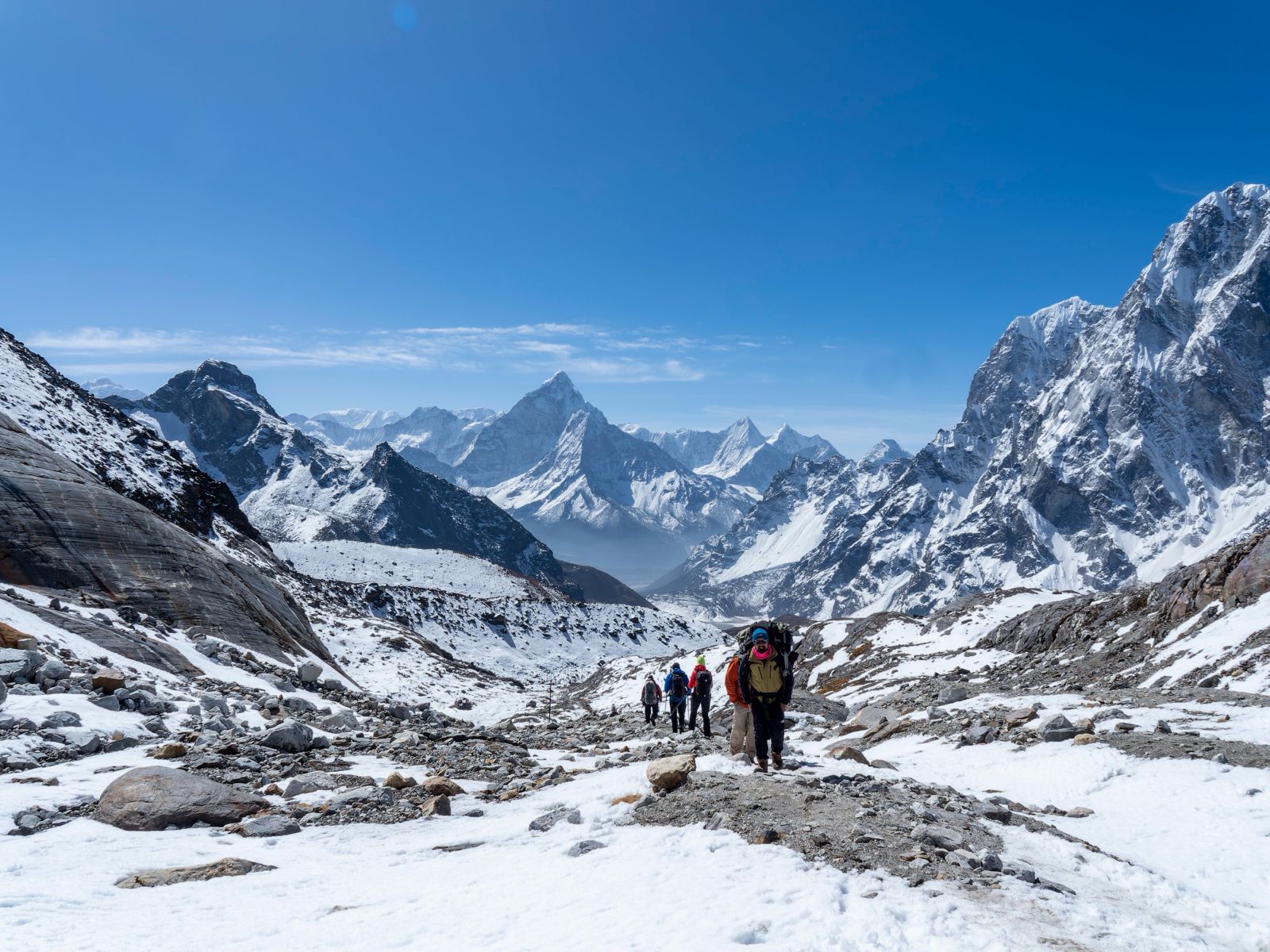
Everest Three High Passes Trek Route Overview
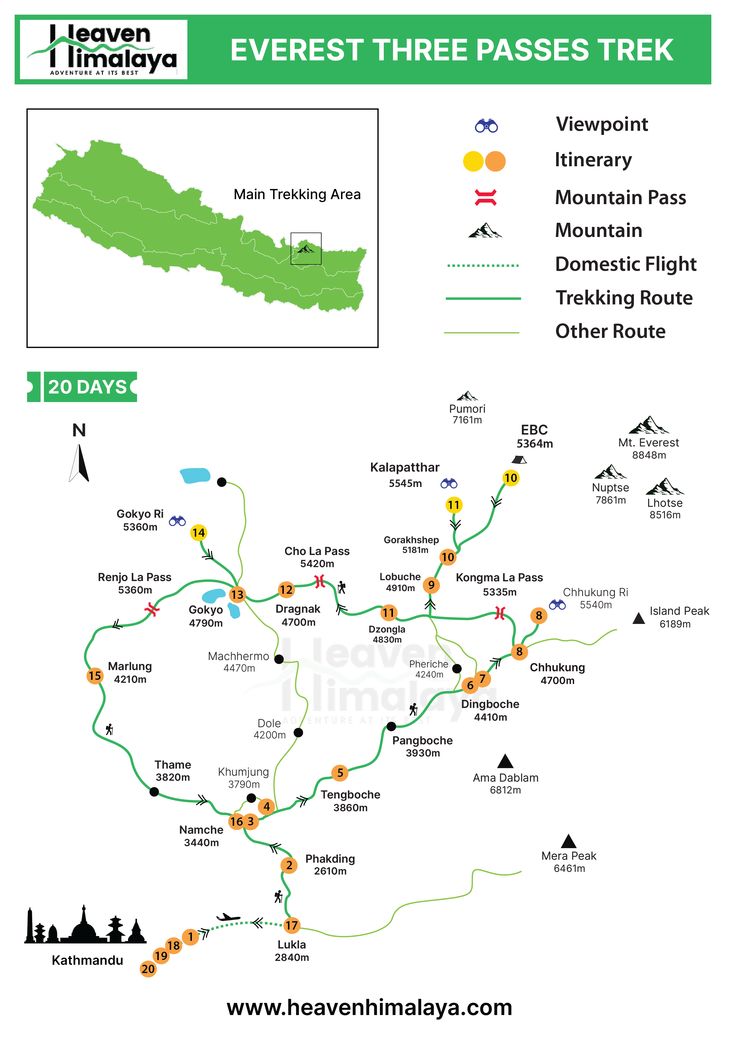
The Everest Three High Passes Trek usually starts and ends in Lukla, the gateway to the Everest region. It's a loop, or circuit trek, which means you'll make a complete circle through the Khumbu Valley rather than retracing your steps.
Its route goes like this: Lukla - Namche Bazaar -Tengboche - Dingboche - Kongma La Pass - Cho La Pass - Renjo La Pass - Gokyo - back to Lukla. Along the way, you'll pass through charming Sherpa villages, rhododendron forests, and stunning glacial landscapes.
Some trekkers prefer going clockwise because it makes the pass crossings slightly easier and keeps the higher-altitude days more balanced, while anticlockwise can be more challenging but offers a different perspective of the mountains.
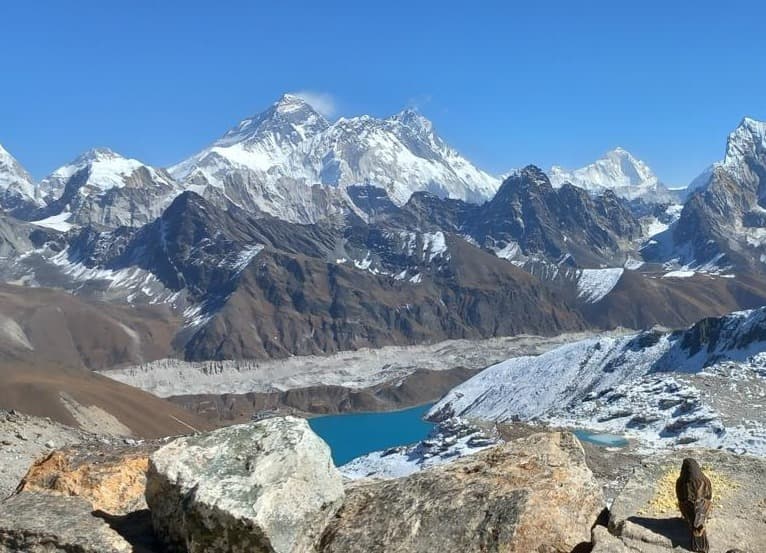
Key landmarks you'll see along the way include EBC, Kala Patthar for the perfect summit views, Threee Passes (Kongma La, Cho la, Renjo La) and the stunning Gokyo Lakes, which are an absolute highlight of this Everest Circuit Trek.
This route overview gives you a clear picture of the journey. Next, let's dive into the day-by-day itinerary so you can plan your adventure in detail.
Everest Three High Passes Itinerary (Day-by-Day Overview)
- Day 01: Arrival in Nepal for Three Passes Trekking
- Day 02: Flight to Lukla Airport-Start trekking to Phakding (2,652 m/8,699 ft) Duration: 3-4 Hours
- Day 03: Trek to Namche Bazaar (3,440 m/11,283 ft) Duration: 6 hours.
- Day 04: Acclimatization Day for important rest for your body while adapting to an unfamiliar environment at Namche Bazaar.
- Day 05: Trek to Tengboche (3,860 m/12,660 ft) Duration: 5-6 Hours
- Day 06: Trek to Dingboche (4,410 m/14,464 ft) Duration: 5 hours.
- Day 07: Acclimatisation Day
- Day 08: Trek to Chhukung (4,700 m/15,416 ft.) Duration: 2 hours. As well as climbing Chhukung Ri (5,540 m/18,171 ft).
- Day 09: Trek to Lobuche (4,910 m/16,104 ft.) via Kongma La pass (5,335 m/17,498 ft.). Time required: 7-8 hours.
- Day 10: Trek to Gorakshep, visit Everest Base Camp (5,364 m/17,594 ft) and return to Gorakshep (5,181 m/16,994 ft). Duration: 8 hours.
- Day 11: Gorak Shep to Kala Patthar (5,545 m/18,188 ft), then Dzongla (4,830 m/15,840 ft).Duration: 7 hours.
- Day 12: Cross the Chola Pass and hike to Dragnak/Thagna (4,700 m/15,415 ft). Duration: 5 hours.
- Day 13: Trek to Gokyo Lake (4,790 m/15,710 ft.) Duration: 7-8 hours.
- Day 14: Acclimatisation day with a hike to Gokyo Ri (5,483 m/1,998 ft) and back to Gokyo Lake. Duration: 5 hours.
- Day 15: Trek to Marlung (4,300 m/14,104 ft) via Renjo La Pass (5,340 m/17,843 ft). The time needed: 7-8 hours.
- Day 16: Trek to Namche Bazaar (3,440 m/11,283 ft) Duration: 4 hours.
- Day 17: Trek to Lukla (2,800 m/9,184 ft) Duration: 7-8 hours.
- Day 18: Fly back to Kathmandu.
- Day 19: Reserve Day in Kathmandu
- Day 20: Final Departure of High Pass Trekking
The Three Pass Detailed Itinerary provides a day-by-day breakdown of the trek, including activities, major attractions, and the specific trail followed each day.
How Difficult Is The Everest Three High Passes Trek
This is one of the most challenging treks in Nepal, and the difficulty of the Everest Three Passes Trek is definitely greater than the classic EBC route. However, don't worry, it's tough for good reasons, and understanding what makes it difficult helps you prepare better.
First, there's the altitude. You'll be trekking above 5,000 meters multiple times, where the air is thinner, and your body needs proper acclimatisation. This is the biggest factor behind the overall difficulty of high-altitude trekking in this regionSecond, expect long trekking days, usually around 6 to 8 hours. Some days, especially during pass crossings, can feel even longer and more demanding. Third, the high passes themselves, Kongma La, Cho La, and Renjo La, include steep climbs, rocky paths, and sometimes icy sections, depending on the season.
That said, this trek is suitable for fit and experienced trekkers who are comfortable with multi-day hiking. And the good news? With proper preparation, pacing, and acclimatisation, it's absolutely achievable.
Everest Three High Passes Trek Cost Breakdown
The total cost for trekking the Everest Three High Passes ranges from USD 1,200 to 2,500+ per person, depending on how you plan your trip. Your overall Everest trek budget can vary quite a bit based on whether you go independently or choose a guided package.
Let's break it down simply:
- Permits: Expect to spend around USD 50 to 70 for the required permits, including Sagarmatha National Park and local municipality fees.
- Flights (Kathmandu to Lukla): This is one of the higher costs, typically USD 180 to 250 one way.
- Food & Accommodation: Teahouses are affordable, but prices increase with altitude. Budget around USD 25 to 40 per day for meals and a basic room.
- Guide/Porter: A guide may cost USD 25 to 40 per day, while a porter costs around USD 15 to 25 per day
If you go independently, you can save money but need to handle all logistics yourself. On the other hand, a guided trek costs more upfront but includes planning, safety, and support throughout the journey. It reduces risk and simplifies logistics, especially on a demanding route like this.
Best Time For Everest Three High Passes Trek
Choosing the best time to trek the Everest Three Passes is super important because weather plays a huge role, especially when crossing high-altitude passes. Let's break it down based on the main Everest trekking seasons:
Spring (March To May)
- Weather: Mild temperatures, stable conditions, clear skies
- Pros: Great visibility, blooming rhododendrons, safer pass crossings
- Cons: Slightly busy in popular sections
One of the best seasons to go
Autumn (September To November)
- Weather: Clear skies, dry air, excellent mountain views
- Pros: Best visibility of the year, ideal trekking conditions
- Cons: Peak season, so trails can be crowded near main stops
Another best season for this trek
Winter (December To February)
- Weather: Very cold, snow-covered trails, strong winds
- Pros: Fewer trekkers, peaceful experience
- Cons: Passes can be blocked by snow or extreme cold
Only for experienced trekkers
Monsoon (June To August)
- Weather: Heavy rain, cloudy skies, slippery trails
- Pros: Green landscapes, fewer crowds
- Cons: Poor visibility, flight delays, risky conditions
Generally not recommended
Overall, spring and autumn are the best seasons for trekking the Everest Three High Passes, offering the safest conditions and the most rewarding views.
Permits Required For Everest Three Passes Trek
Before starting your trek, you'll need to arrange a couple of permits for the Everest Three Passes Trek. Don't worry, it's pretty straightforward.
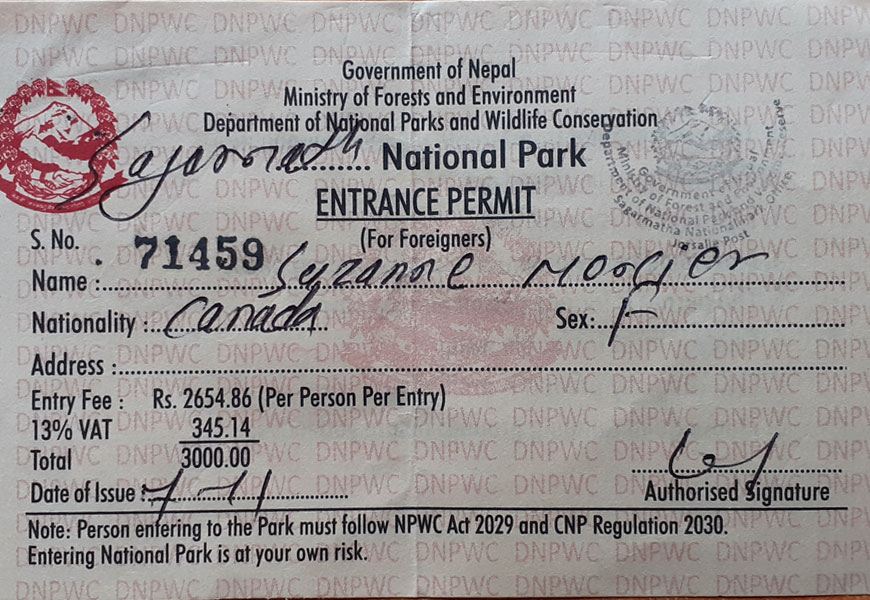
- Sagarmatha National Park Permit: It's required to enter the national park area. It costs around NPR 3,000 (about USD 25) for foreigners. You can get it either in Kathmandu (Nepal Tourism Board office) or at the park entry point in Monjo.
- Khumbu Pasang Lhamu Municipality Permit: This local permit costs about NPR 2,000 to 3,000, depending on where you get it. It's usually issued in Lukla or Monjo.
These are the only main permits you need. There's no longer a TIMS card required for this region.
That's it. Once your permits are sorted, you're good to go for the adventure. In addition, always carry a few copies of your passport, as you may need them at checkpoints along the trail.
Accommodation And Food On The Trail
When it comes to accommodation on the Everest Three Passes Trek, you'll mostly be staying in traditional teahouses, and that's a big part of the experience. This style of teahouse trekking in Nepal keeps things simple, local, and authentic.
Rooms are often basic, with twin beds, a mattress, a blanket, and maybe a small table. Don't expect luxury; the walls are thin, and heating is only in the dining area. Bathrooms are mostly shared, and hot showers or charging devices often cost extra.
Food on the trail is simple but surprisingly good. The main staple is dal bhat (rice, lentils, and vegetables), which is filling and often comes with refills. You'll also find noodles, soups, pasta, pancakes, and other basic Western options on most menus.
One thing to keep in mind: as you go higher, prices increase because everything has to be carried up by porters or yaks. Overall, it's not about comfort; it's about a warm meal, a place to rest, and enjoying the raw Himalayan experience.
Essential Packing List For Everest Three Passes Trek
Preparing a solid packing list for trekking the Everest Three Passes is super important because you'll be dealing with cold weather, high altitude, and changing conditions. A smart high altitude packing list is all about layering, lightweight gear, and essentials that keep you safe and comfortable.
Clothing
- Down jacket (must-have for cold nights)
- Thermal base layers (top & bottom)
- Fleece or insulated mid-layer
- Waterproof jacket & pants
- Trekking pants (2 pairs)
- Moisture-wicking t-shirts
- Warm hat, gloves, and buff
- Trekking socks (3 to 4 pairs)
Gears
- Trekking boots (well broken-in, very important)
- Sleeping bag (rated for -10°C or lower)
- Backpack (minimum 55L) + daypack
- Trekking poles
- Headlamp with extra batteries
- Sunglasses (UV protection)
- Water bottles + purification tablets
Documents
- Passport (original)
- Passport copies (very important)
- Travel insurance
- Permits (Sagarmatha & Khumbu)
Keep it light but don't skip the essentials, especially your down jacket, trekking boots, and sleeping bag, as they make a huge difference at higher altitudes.
Do You Need A Guide For Trekking The Everest Three High Passes
Technically, you don't have to hire a guide for the Everest Three Passes Trek, but going without one isn't as easy as it sounds. This route takes you through remote sections of the Khumbu Region, where trails can get confusing, especially around high passes or in bad weather. Although parts of the trail are marked, navigation can still be tricky in snow or low visibility.
Then there's the safety side. You're trekking above 5,000 m, where altitude sickness and sudden weather changes are real concerns. The Himalayas are known for their unpredictable weather, and conditions can change quickly, making already difficult sections even more challenging.
A professional trekking guide in Nepal doesn't just lead the way; they help with acclimatisation, handle logistics, and support you in case of emergencies. On a demanding trek like this, that support can make a huge difference.
So while it's possible to go solo if you're highly experienced, for most trekkers, hiring a guide is the smarter and safer choice. It lets you focus on enjoying the journey instead of worrying about the risks.
Final Thoughts
The Everest Three High Passes Trek isn't an easy journey. It pushes your limits with high altitude, long days, and tough mountain passes.
But that's exactly what makes it so rewarding. From crossing dramatic Himalayan passes to witnessing Everest from multiple angles, this trek gives you an experience that goes far beyond the usual routes.
What really makes it special is how complete and raw it feels, with less crowded trails, diverse landscapes, and a true sense of adventure at every step. It's not just a trek; it's something you'll remember for life.
If you're ready for a real challenge and want to experience Everest in its fullest form, now is the perfect time to plan or book your trek, or simply reach out and start preparing for this incredible journey.